August 14, 2026 • Declan Merritt • 11 min reading time • Prices verified June 17, 2026
Camera Gimbal Stabilizer for Beginners: DJI RS 3 Mini vs FeiyuTech SCORP-C vs Zhiyun Weebill 3E
Camera Gimbal Stabilizer for Beginners: DJI RS 3 Mini vs FeiyuTech SCORP-C vs Zhiyun Weebill 3E
A camera gimbal is a motorized handheld stabilizer — a device with three spinning axes (pan, tilt, and roll) that uses sensors and motors to keep your camera level and smooth while you walk, turn, or move quickly. Without one, handheld footage looks shaky; with one, it can look like it was shot on a dolly. If you’re shooting anything — vlogs, short films, weddings, commercial product work — a gimbal is usually one of the first pieces of motion equipment worth owning outright rather than renting.
The challenge is that the entry-level gimbal market now has a dozen credible options and the spec sheets look nearly identical on paper. This comparison cuts through that noise for three specific models you’re likely weighing right now: the DJI RS 3 Mini, the FeiyuTech SCORP-C, and the Zhiyun Weebill 3E. You’re already past the “do I need a gimbal?” question. What you need is a clear decision frame: which one fits your camera, your shooting style, and what you’re actually doing in the next six months.
| EDITOR'S PICKZHIYUN CINEPEER Weebill 3E | Mid-tierDJI RS 3 Mini | Budget pickFeiyuTech SCORP-C Gimbal Stabil… | |
|---|---|---|---|
| Payload | 3 kg | 2 kg (4.4 lbs) | 5.5 lbs |
| Vertical shooting | ✓ | ✓ | — |
| Bluetooth shutter | ✓ | — | — |
| Price | $249.00 | $199.00 | $189.00 |
| See on Amazon → | See on Amazon → | See on Amazon → |
The Core Trade-off at This Price Point
Before the head-to-head: all three gimbals operate in the same rough purchase tier, and all three will stabilize a mirrorless or compact cinema camera reliably when balanced correctly. The differentiators are not dramatic — they’re ergonomic, ecosystem-related, and workflow-specific. That’s exactly where beginners consistently get surprised.
No Film School’s guide to gimbal balancing — “How to Balance a Camera Gimbal (And Why It Matters)” — makes a point that holds true across all three units: first-time users almost always underestimate the balancing step. A gimbal that’s out of balance will fight its own motors, drain battery faster, and produce footage that looks worse than handheld. Budget 20–30 minutes for your first balancing session regardless of which unit you buy. The SCORP-C, RS 3 Mini, and Weebill 3E each have different physical adjustment mechanisms, and none of them are genuinely intuitive the first time.
With that said, here’s where the three diverge in ways that actually matter for your day-to-day shooting.
Head-to-Head: Three Gimbals, Three Use Cases
DJI RS 3 Mini: The Portability Specialist
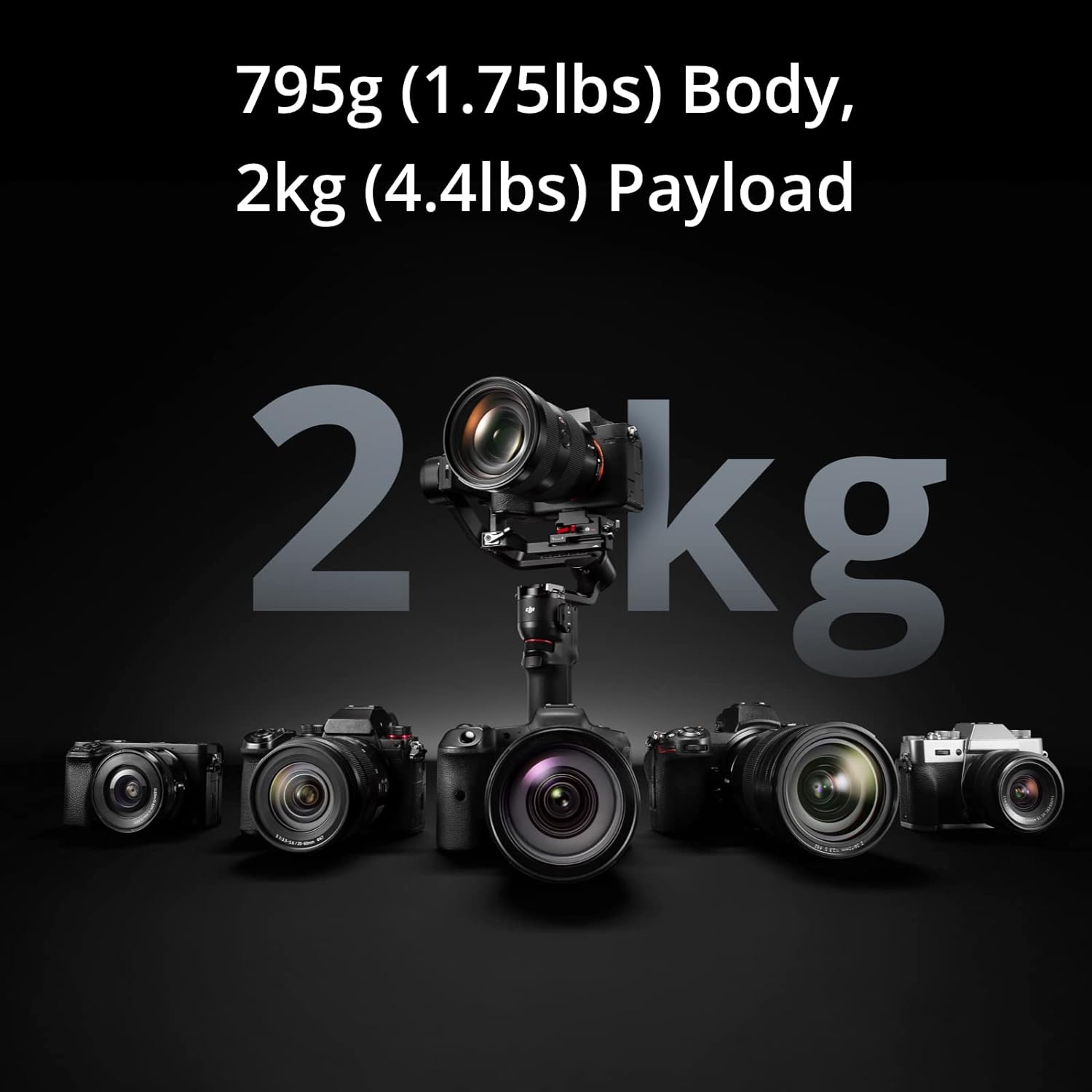
The RS 3 Mini is DJI’s lightest standalone gimbal in the RS line, spec-rated at a 2 kg (4.4 lb) payload capacity. That covers most mirrorless bodies — a Sony A7C, Fujifilm X-S20, Canon R8 — with a lightweight prime lens attached, but it leaves very little headroom for a cage, monitor, or fast f/1.4 glass with a heavy front element.
Published specs from DJI’s official RS 3 Mini product page put the gimbal’s own weight at approximately 795 g (1.76 lbs), which is genuinely light. Owners consistently praise the RS 3 Mini for travel and run-and-gun work precisely because it disappears into a bag and comes out fast. Aggregated owner ratings on B&H Photo’s RS 3 Mini product listing hold at 4.4 stars, and the dominant theme in written reviews is portability and ease of carry over long distances.
The friction point that surfaces repeatedly in owner feedback is the onboard touchscreen: it is small enough that menu navigation becomes a genuine ergonomic annoyance in cold weather or when wearing gloves. Setup documentation is described by multiple reviewers as sparse — functional, but not the kind of guided experience that helps a first-time user internalize what they’re doing during the balancing process.
The DJI Ronin app integration is the RS 3 Mini’s strongest differentiator from a workflow standpoint. If you’re already using DJI hardware — a drone, a previous-generation RS gimbal, or DJI’s transmission systems — the app-based control, ActiveTrack subject tracking, and automated timelapse modes feel like natural extensions of an ecosystem you already know. If you’re starting fresh, that ecosystem lock-in is a real consideration: DJI accessories are not cross-compatible with FeiyuTech or Zhiyun mounting hardware. Cinema5D’s overview “Best Camera Gimbals for Mirrorless Cameras 2025” specifically flags the RS 3 Mini as a body-plus-small-prime unit rather than a general-purpose production gimbal — a useful framing for anyone wondering whether they can grow into it with a heavier rig.
Best fit: Travel shooters and vloggers with a compact mirrorless body and a small prime. If your rig weighs under 1.8 kg all-in, the RS 3 Mini is probably the cleanest daily-carry option on this list.
Watch out for: Full-frame bodies with any substantial glass. A Sony A7 IV with even a moderate zoom will approach or exceed the rated payload.

FeiyuTech
$189.00
In stock on Amazon
Check price on AmazonFeiyuTech SCORP-C: The Value Outlier
The SCORP-C consistently surprises people who come in expecting a budget compromise. Owner reviews aggregated on B&H Photo’s SCORP-C product listing carry a 4.3-star average and include language like “almost absurdly affordable for what it does.” The pattern that emerges across that feedback is that the SCORP-C handles cameras it theoretically shouldn’t — including the Sony FX3 with larger lenses — without complaint, even though the spec-rated payload from FeiyuTech’s official SCORP-C product page sits at approximately 2.5 kg (5.5 lbs).
The form factor is the SCORP-C’s signature. FeiyuTech built the handle and axis configuration around a different ergonomic philosophy than DJI or Zhiyun: owners frequently cite the grip and balance point as a differentiator for extended solo shoots. If you’re operating without an assistant and need to keep a gimbal in your hand for 45-minute stretches, the handle geometry matters more than it looks on a spec sheet.
One important distinction to keep straight: the FeiyuTech SCORP Mini 2 is a separate, lighter product in FeiyuTech’s catalog and carries a 3.7-star aggregate rating on B&H Photo, with documented overload error issues reported by users. The SCORP-C is a different product with a meaningfully different review profile. Don’t let the similar naming conflate two distinct units when you’re reading reviews online.
The SCORP-C’s weak point relative to the other two is app sophistication. FeiyuTech’s companion app is functional but less polished than DJI’s Ronin app and does not offer the same depth of automation features. For shooters who want to program complex motion paths or use object tracking, the SCORP-C will feel limited. For shooters who just need stable, high-quality footage from a well-built physical rig, the app gap rarely matters in practice.
Best fit: Solo operators handling a range of cameras — including the occasional FX3-class body with a mid-weight lens — who prioritize physical ergonomics and payload headroom over smart features.
Watch out for: If automated shooting modes (motion timelapse, subject tracking, app-controlled pan speed) are core to your workflow, the SCORP-C’s app will underwhelm.
DJI
$199.00
In stock on Amazon
Check price on AmazonZhiyun Weebill 3E: The Smart Upgrade Trade-off
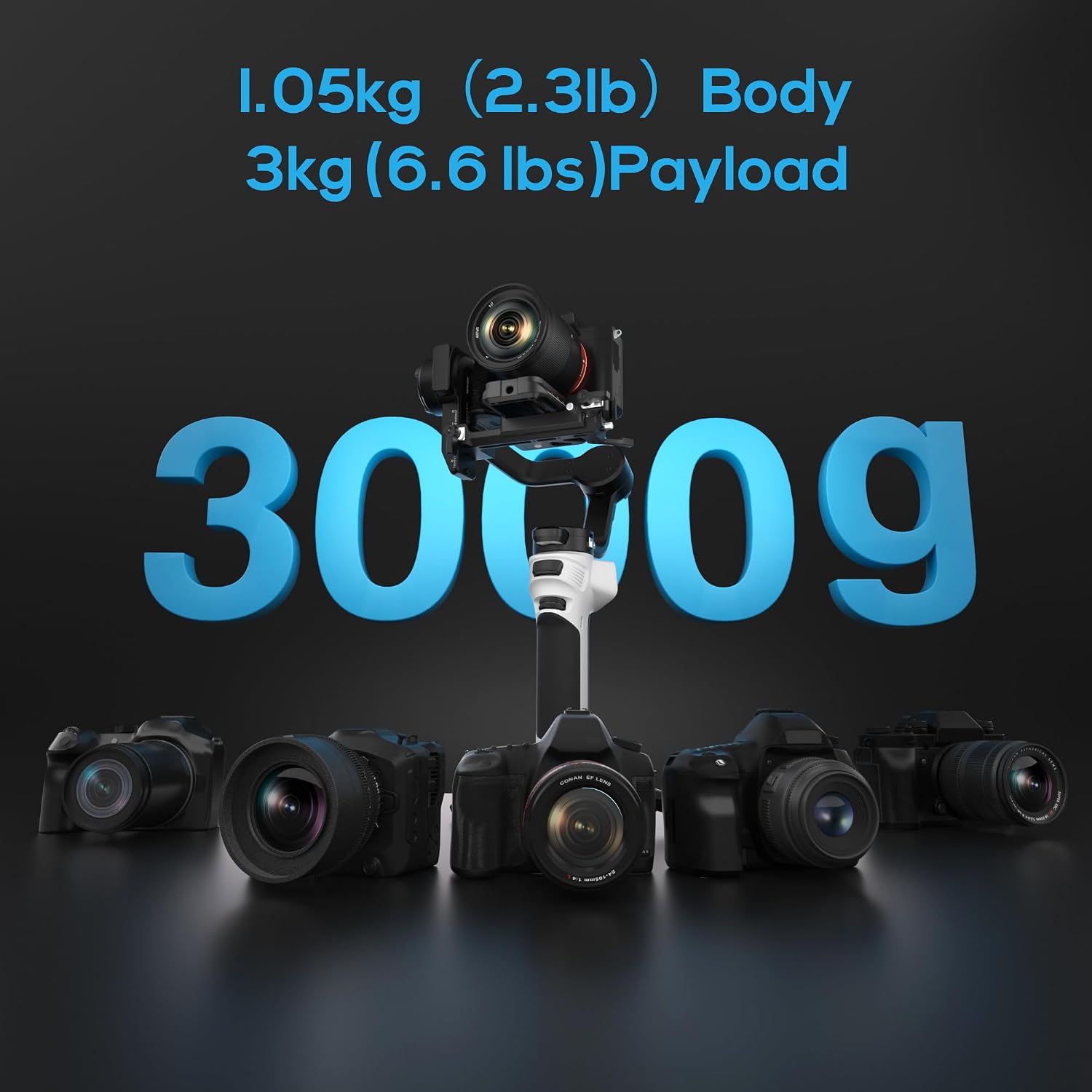
The Weebill 3E occupies a specific position in Zhiyun’s lineup: it’s the leaner, lighter sibling to the Weebill 4E, with published specs from Zhiyun’s official Weebill 3E product page showing a 3 kg (6.6 lbs) payload ceiling. Owners who compared the 3E against the 4E consistently report that the weight savings justify the reduced feature set for shooters whose primary constraint is arm fatigue on long shoots. PremiumBeat’s 2025 gimbal roundup — “Best Gimbals for Filmmakers in 2025” — specifically notes the Weebill 3E as the Zhiyun lineup’s best value proposition for shooters who don’t need the 4E’s extended battery or wireless video transmission.
The Weebill 3E’s payload headroom is its single most practical advantage in this comparison. At 3 kg rated capacity, you have room to run a mid-frame body with a stabilized zoom and still have meaningful buffer. The tradeoff is total system weight: the unit itself is heavier than the RS 3 Mini, and the form factor is less optimized for pure portability.
Zhiyun’s ZY Cami app sits between DJI and FeiyuTech in terms of feature depth — more capable than FeiyuTech’s offering, less seamlessly integrated than DJI’s Ronin ecosystem. Vertical and portrait-mode shooting — increasingly essential for social media deliverables — is supported across all three gimbals in this comparison, but the physical axis rotation to portrait mode is mechanically smoothest on the Weebill 3E based on the documented design of its locking mechanism. If you’re switching between landscape and portrait frequently on the same shoot, that’s a small but real quality-of-life advantage.
The Black and Blue’s “Gimbal Buying Guide for Independent Operators” makes a point worth noting here: if you already own a Weebill 4E, the 3E doesn’t offer a compelling upgrade path — it’s a lateral move down in features for a weight benefit. That buying guide’s framing is that the 4E-to-3E trade is only worth it if physical weight is genuinely limiting your shooting time, not if you’re simply curious about the newer model.
Best fit: Shooters who know they want to grow into heavier rigs within the next year and want payload headroom built in now. Also the strongest option in this group if portrait and vertical mode is a regular deliverable.
Watch out for: If you already own a Weebill 4E, the 3E is not an upgrade — evaluate whether the weight difference actually solves a problem you have before switching.
ZHIYUN
$249.00
In stock on Amazon
Check price on AmazonBy the Numbers
| Feature | DJI RS 3 Mini | FeiyuTech SCORP-C | Zhiyun Weebill 3E |
|---|---|---|---|
| Rated payload | 2.0 kg (4.4 lbs) | 2.5 kg (5.5 lbs) | 3.0 kg (6.6 lbs) |
| Gimbal weight | ~795 g | ~985 g | ~1,040 g |
| App ecosystem | DJI Ronin (strong) | FeiyuTech app (basic) | ZY Cami (mid-tier) |
| Aggregate rating (B&H) | 4.4★ | 4.3★ | 4.3★ |
| Vertical mode support | Yes | Yes | Yes (smoothest rotation) |
| Best for | Travel, compact kits | Solo ops, heavier bodies | Payload headroom, growth |
Frequently Asked Questions
Can the RS 3 Mini handle a full-frame Sony A7 body with a prime lens? It depends on the specific body and lens combination. A Sony A7C with a compact 35mm or 50mm prime sits within the 2 kg payload window on paper, but real-world operator feedback aggregated on B&H Photo’s product listing suggests that any A7-series body with a Tamron or Sigma fast prime starts to push against the limit. Factor in any quick-release plate, lens hood, or ND filter and you’re eating into that budget quickly. The SCORP-C or Weebill 3E gives you more headroom if your full-frame kit extends beyond the lightest possible prime.
Does the SCORP-C work well for solo shooting without an assistant? This is one of the SCORP-C’s strongest use cases. Owner reviews on B&H Photo consistently call out the handle geometry and balance point as particularly well-suited for long solo handheld sessions. The physical design was clearly built with single-operator work in mind — you can power it on, stabilize, and shoot without needing a second person managing cable runs or follow focus.
Is the Weebill 3E worth it if you already own a Weebill 4E? Almost certainly not as an upgrade. As noted in The Black and Blue’s “Gimbal Buying Guide for Independent Operators,” the 3E trades features — battery life, wireless video, some motor performance — for weight reduction. If weight is actively costing you shooting time, the savings matter. Otherwise, the 3E is the right entry point into the Weebill line, not a step forward from the 4E.
How steep is the balancing learning curve for a first-time gimbal user? Steeper than any manufacturer’s marketing will tell you. No Film School’s guide “How to Balance a Camera Gimbal (And Why It Matters)” is direct about this: the first correctly balanced session takes 20–30 minutes and involves a lot of micro-adjustments. The second time takes 10 minutes. By the third or fourth session it is muscle memory. None of the three gimbals in this comparison shortcuts that process. Invest the time on your first session and it pays back on every shoot after.
Which of these supports vertical and portrait shooting for social media? All three support portrait and vertical orientation — this is now standard across the mid-tier gimbal market. The Weebill 3E’s physical axis mechanism makes the rotation to portrait mode the most mechanically smooth of the three based on documented design differences in its locking system. That is a meaningful advantage if you are switching between landscape and portrait formats frequently within a single shoot.
The Decision Rule
Here is the if/then frame that resolves most buying decisions at this tier:
- If your camera kit weighs under 1.6 kg all-in and portability is the priority — the DJI RS 3 Mini is the right call, especially if you are already adjacent to the DJI ecosystem. Cinema5D’s gimbal overview reinforces this framing: it is a body-plus-small-prime unit, not a general-purpose production tool.
- If you are a solo operator running heavier mirrorless or compact cinema bodies and you want ergonomic endurance over smart features — the FeiyuTech SCORP-C is the value outlier that earns its reputation, particularly for extended handheld sessions without crew support.
- If you want payload headroom for where your kit is going in the next 12 months, and vertical or portrait delivery is part of your regular output — the Zhiyun Weebill 3E is the one to grow into, as PremiumBeat’s 2025 roundup “Best Gimbals for Filmmakers in 2025” positions it.
The balancing curve is real regardless of which direction you go. Budget time for it, watch the manufacturer tutorials before your first shoot, and never skip it on a job day. A well-balanced gimbal on any of these three units will consistently outperform a poorly balanced one at twice the price.