May 16, 2026 • Declan Merritt • 11 min reading time • Prices verified June 17, 2026
Camera Gimbal Stabilizer Shootout: DJI RS 4 vs RS 5 vs FeiyuTech SCORP-C
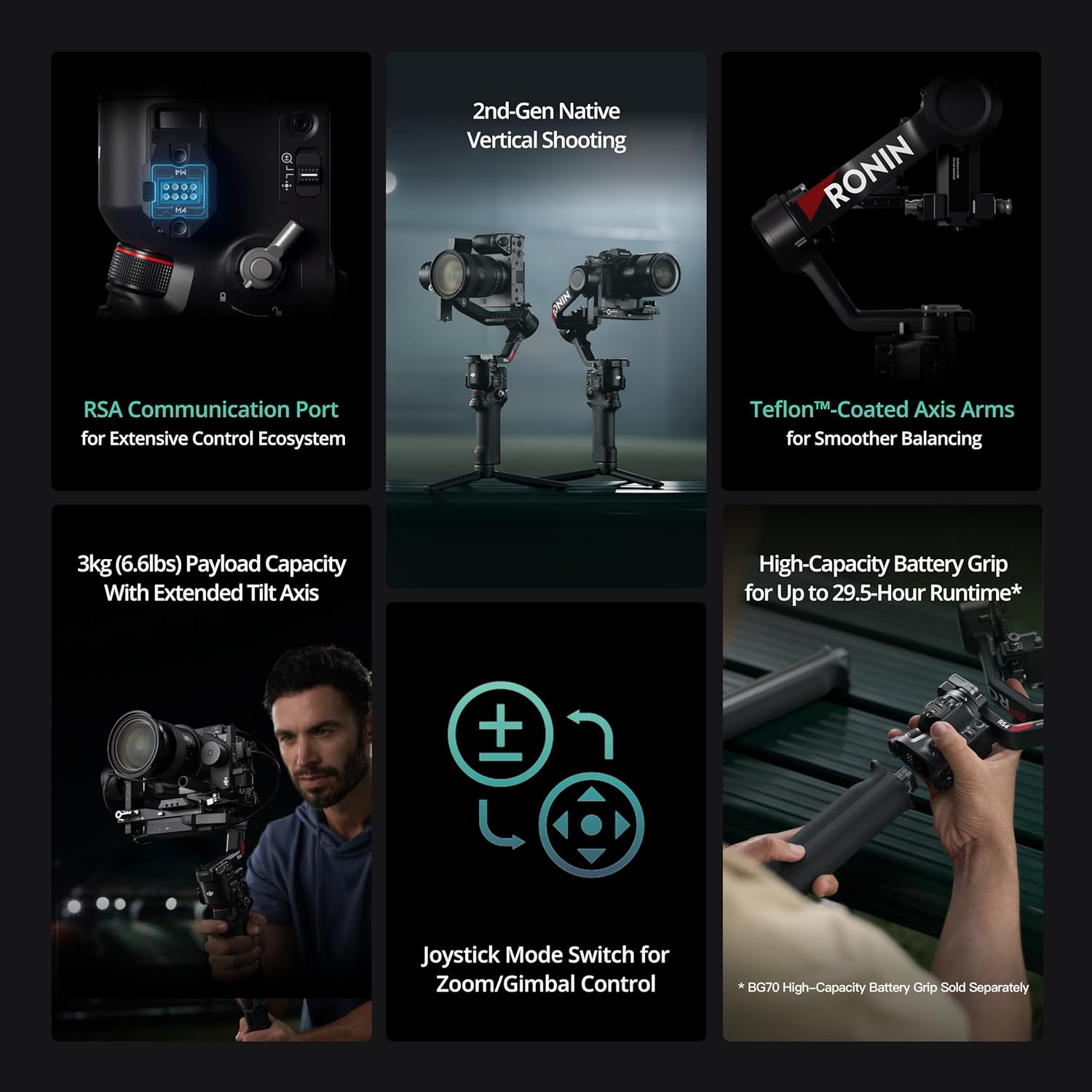
A gimbal stabilizer is a motorized handheld device that keeps your camera level and shake-free while you walk, run, or move through a scene — the difference between footage that looks cinematic and footage that looks like it was shot on a bumpy bus. If you’re building toward a one-person-crew workflow or starting to take on paid work, the gimbal you choose has real downstream effects: it determines what camera and lens combinations you can run, whether an assistant can monitor your shot remotely, and how much you’ll want to throw the whole thing in a river during a long shooting day. This article puts three current contenders side by side — the DJI RS 4, the DJI RS 5, and the FeiyuTech SCORP-C — and gives you a clear framework for deciding which one belongs in your kit. The Zhiyun Weebill 3E gets a brief appearance as a portability-first alternative where relevant.
The Short Version: Where Each Gimbal Lives
Before diving into specs, here’s the honest competitive position of each unit as of mid-2026:
DJI RS 4 — The Value Anchor
The current value anchor of the RS line now that the RS 5 has taken the flagship slot. Solid stabilization, fast setup, and an excellent app ecosystem make it a dependable daily driver. It runs into limits with heavy rigs — operators pairing it with a Sony FX6 or a RED Komodo plus a fast telephoto will feel those limits acutely. According to B&H Photo’s gimbal category listings and editorial coverage from No Film School’s gimbal buyer’s guide, the RS 4 remains a recommended starting point for operators whose rigs stay comfortably under 2.5 kg total.

FeiyuTech
$189.00
In stock on Amazon
Check price on AmazonDJI RS 5 — The Current Flagship
DJI’s top single-handle consumer/prosumer gimbal. The payload jump is real, the tracking module is a genuine workflow tool for solo operators, and the LiDAR-assisted focus adds a capability the RS 4 simply doesn’t have. It costs more, but since the RS 5 launch drove the RS 4’s street price down, the gap between them narrowed enough to make the upgrade math interesting. Cinema5D’s RS 5 first-look coverage positions it as the first RS-series gimbal that seriously addresses solo documentary and travel production without compromise.
DJI
$469.00
In stock on Amazon
Check price on AmazonFeiyuTech SCORP-C — The Wildcard
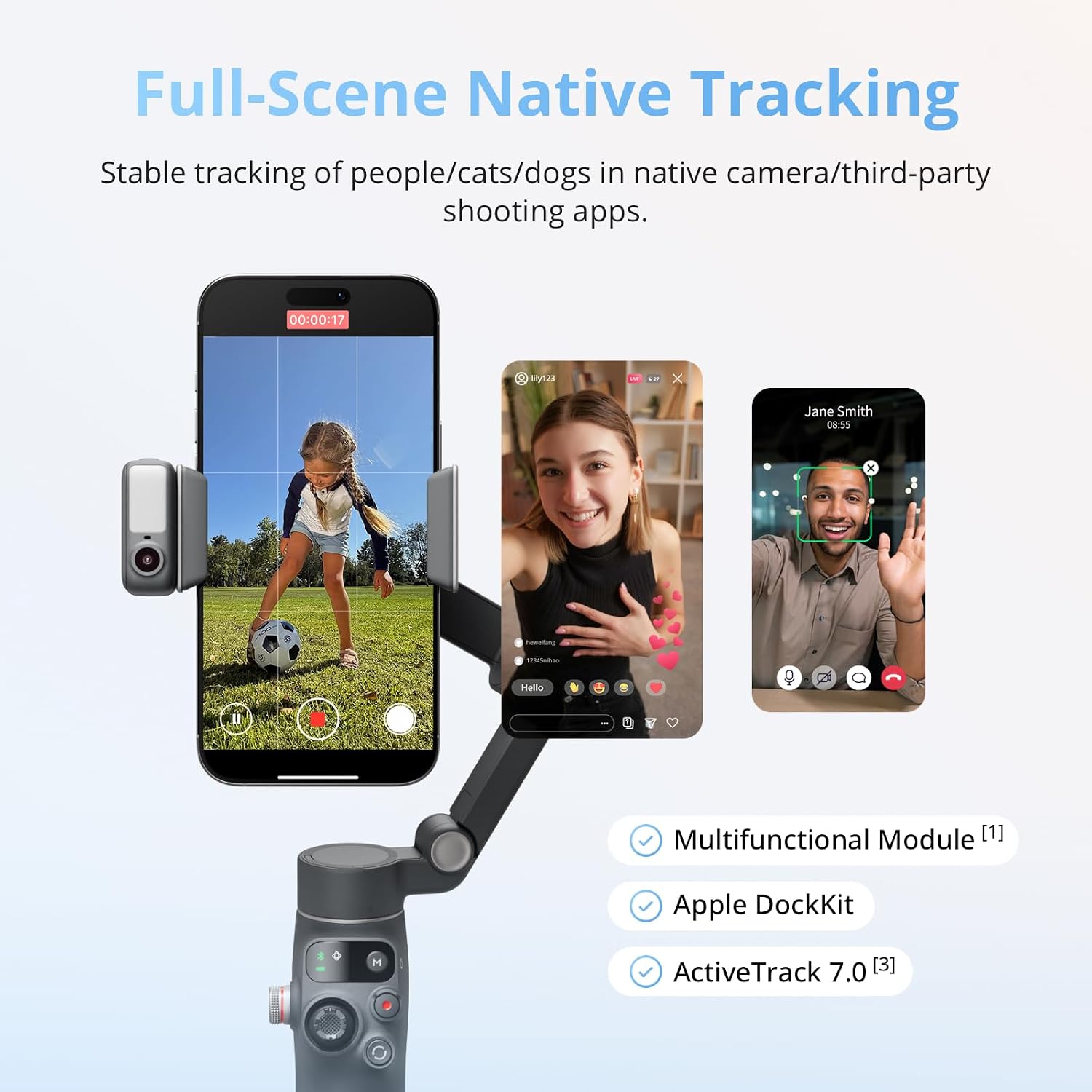
Owners using it with FX3 bodies and large lenses consistently report it handles their heaviest configurations with authority — a pattern that shows up repeatedly across long-run editorial reviews at sites including PremiumBeat and DPReview’s camera stabilizer category coverage. Multiple reviewers invoke phrases like “punches above its price” when describing its stabilization quality, which is a signal worth taking seriously. It overperforms relative to its cost tier.
DJI
$125.00
In stock on Amazon
Check price on AmazonPayload: The Number That Actually Matters
Payload is where gimbal decisions should start — not because the rated number tells the whole story, but because exceeding it degrades stabilization quality before it physically fails. Think of rated payload as the number where the motors are working comfortably, not the cliff edge.
By the numbers (manufacturer-rated payload):
- DJI RS 4: 3 kg (6.6 lb)
- DJI RS 5: 4.5 kg (9.9 lb)
- FeiyuTech SCORP-C: 3 kg (6.6 lb)
On paper, the RS 4 and SCORP-C are identical at 3 kg. In practice, the picture splits. Editorial coverage from Cinema5D and operator accounts documented in DPReview’s stabilizer category overview consistently flag the RS 4 as struggling when you approach its ceiling — particularly with large telephoto lenses or when a cage, follow-focus unit, and monitor add up fast. The RS 5’s 4.5 kg rating gives you actual headroom for a caged mirrorless body plus a 70-200mm f/2.8, which is where a lot of mid-range commercial work lives.
The SCORP-C is the interesting exception. Owner and editorial reports — including coverage from PremiumBeat’s gimbal stabilizer overview — suggest it performs with more authority than its rated payload implies. Whether that’s motor tuning, torque headroom, or algorithm differences, the pattern across aggregated reviews is consistent enough to flag. The SCORP-C is not the same experience as running a sub-3 kg rig on any of these gimbals; it manages weight load with unusual stability for its class.
The payload trap to avoid: Your camera body weight is never your total payload. Add your lens, any cage or baseplate, a wireless follow-focus receiver, and a small monitor, and you’ll regularly add 600g–1.2 kg to whatever the body alone weighs. If you’re running a Sony A7S III with a Sigma 50mm f/1.4 Art in a SmallRig cage, you’re already past 2.5 kg before anything else touches the rig. B&H Photo’s gimbal buying guide makes this same point explicitly: spec against your complete assembled rig, not the naked body.
Tracking and Solo Workflow: Where the RS 5 Earns Its Keep
The RS 4 stabilizes. The RS 5 stabilizes and follows.
DJI’s ActiveTrack Pro system on the RS 5 uses a dedicated tracking module — combining camera image analysis with a Bluetooth/Wi-Fi link to compatible Sony, Canon, and Nikon bodies — to lock the gimbal’s pan axis onto a moving subject automatically. For solo travel content creators or one-person-crew documentary operators, this is a workflow change, not just a spec upgrade. You can set up on a tripod, step in front of the camera, and have the gimbal track you through a scene without a camera assistant.
The RS 4 does not have this hardware. You can use DJI’s app-based subject tracking with some body and lens combinations, but it relies entirely on the camera’s own AF system rather than dedicated tracking hardware. No Film School’s gimbal buyer’s guide notes this as the practical dividing line between the two: if your work involves shooting yourself or requires reliable subject tracking in a one-person setup, the RS 5’s module is a legitimate production tool. If you’re always behind the camera and an assistant handles focus, you’re paying for hardware you won’t use.
The RS 5’s tracking module also feeds its LiDAR rangefinder for focus pulls — a meaningful addition if you’re pulling focus on a moving subject without an AC. PremiumBeat’s gimbal stabilizer overview identifies LiDAR-assisted focus as one of the features that separates current-generation gimbals from their predecessors in practical solo-operator scenarios.
The FeiyuTech SCORP-C offers FeiyuTech’s VLOG mode and basic object tracking through its companion app, but it does not match the RS 5’s dedicated module in sophistication or reliability. SCORP-C operators tend to use it in more traditionally-operated setups rather than autonomous tracking scenarios.
Setup, Balancing, and the Learning Curve Everyone Forgets to Mention
DJI RS 4 and RS 5 — Guided Ecosystem Advantage
Across nearly every gimbal in this class, reviews share a consistent arc: the first balancing session is described as confusing, time-consuming, or under-documented — and then “much easier” on every subsequent use. This is a category-wide reality worth naming explicitly if you’re setting expectations for a rental or a new hire’s first day.
DJI’s RS gimbals benefit from DJI’s app ecosystem, which walks you through balance checks, motor calibration, and profile switching in a way that is meaningfully more guided than competitors. Adorama’s editorial coverage of the RS line highlights the Ronin app’s step-by-step calibration flow as one of the concrete advantages for operators new to motorized gimbals. If you’re already in the DJI ecosystem — Ronin app, DJI camera bodies, DJI wireless monitors — the RS 4 or RS 5 drops into your workflow with minimal friction.
FeiyuTech
$189.00
In stock on Amazon
Check price on AmazonFeiyuTech SCORP-C — Strong Performance, Thinner Ecosystem
The SCORP-C’s setup experience draws more mixed commentary. Owners using it with Sony bodies report the initial axis balancing is straightforward, but FeiyuTech’s companion app is consistently rated below DJI’s in terms of interface clarity and feature depth. DPReview’s camera stabilizer category coverage notes that FeiyuTech’s app has improved through successive firmware iterations but that DJI still leads on ecosystem depth and third-party integration. The tradeoff is real: once balanced, operators report the SCORP-C holds its balance through long shooting days with unusual consistency.
DJI
$125.00
In stock on Amazon
Check price on AmazonZhiyun Weebill 3E — Portability First, Patience Required
The Zhiyun Weebill 3E draws praise specifically for portability — multiple owners report prioritizing it over heavier alternatives after extended travel shoots — but balancing a longer lens requires more patience than the RS-series axis adjustment system. No Film School’s gimbal coverage flags Weebill’s documentation gap as wider than DJI’s, making the initial learning curve steeper for operators without prior gimbal experience. Budget extra time on first setup with any new lens combination.
DJI
$125.00
In stock on Amazon
Check price on AmazonThe Decision Framework
Here’s the honest “if X, then Y” breakdown based on published manufacturer specifications and aggregated editorial coverage:
If your total rig weight consistently stays under 2.5 kg and you don’t need autonomous tracking: The RS 4 at its post-RS 5-launch street price is the rational choice. It stabilizes well, the DJI ecosystem is a genuine asset, and you’re not paying for hardware you won’t use. B&H Photo’s gimbal category listings position it as the entry point for operators transitioning from no stabilization to motorized stabilization.
If you shoot solo, track subjects, or regularly run rigs between 3–4 kg: The RS 5 is the right call. The payload headroom and tracking module are both used, not just owned. Cinema5D’s RS 5 first-look coverage describes it as the first RS-series gimbal that seriously addresses solo documentary and travel production use cases without compromise.
If you’re running a Sony FX3 or equivalent mid-size cinema body with large native lenses and budget is a real constraint: Take the SCORP-C more seriously than its price suggests. Editorial accounts documented in PremiumBeat’s gimbal stabilizer overview and DPReview’s stabilizer category coverage consistently describe it as performing above its tier. The phrase “punches above its price” appears often enough across independent editorial sources to be meaningful signal, not marketing noise.
If portability and pack size are primary constraints: The Weebill 3E earns consideration, but with the caveat that the balancing experience requires more patience and the ecosystem depth is thinner than DJI’s.
Frequently Asked Questions
Does the DJI RS 4 handle large telephoto lenses or cinema-body setups? It handles them, but with less margin than the RS 5. Operators running a caged Sony FX3 or RED Komodo with a 70-200mm-class lens consistently find that the RS 4’s motors are working near their ceiling. Stabilization quality degrades at the edges of the payload range rather than failing cleanly — you’ll see motor strain before you hit a hard wall. DPReview’s stabilizer category coverage flags this as a known characteristic of 3 kg-rated gimbals paired with fully-accessorized cinema bodies.
What does the RS 5 tracking module actually do that the RS 4 can’t? The RS 5 uses dedicated hardware — computer vision via the camera feed combined with DJI’s Bluetooth/Wi-Fi body link — to autonomously pan and track a moving subject. The RS 4 relies on the camera’s internal AF system for any tracking behavior, which is less reliable at frame edges and in mixed light. The RS 5 also uses LiDAR for distance measurement to assist focus pulls. For solo operators who need to appear on camera, this is a functional workflow difference, not a spec sheet abstraction. No Film School’s gimbal buyer’s guide identifies this hardware distinction as the single most important differentiator for one-person-crew operators evaluating the two models.
Is the FeiyuTech SCORP-C genuinely reliable or just inexpensive? Based on aggregated long-run editorial reviews including coverage from PremiumBeat and DPReview’s stabilizer category, it is genuinely reliable — particularly for operators running Sony mirrorless bodies up to FX3 size. The recurring description of it as overperforming for its price tier across independent editorial sources is the clearest signal that its stabilization quality is real. The tradeoff is a less polished app ecosystem and fewer third-party integrations compared to DJI.
How much harder is the Weebill 3E to balance compared to DJI RS gimbals? Owner and editorial accounts describe the Weebill 3E’s balancing process as requiring more manual adjustment, especially with longer lenses — the axis locking and fine adjustment system is less intuitive than DJI’s quick-release plate approach. No Film School’s gimbal coverage documents this as the consistent friction point in Weebill’s otherwise positive portability story. Once balanced, it holds well. Budget extra time on the first setup with any new lens combination.
Do I need the RS 5 if I already own the RS 4? Only if one of two things is true: your rigs are consistently pushing past 3 kg total, or you need autonomous subject tracking for solo shooting. If neither applies, the RS 4 is not a limiting factor in your current work. B&H Photo’s editorial gimbal coverage makes the same recommendation: upgrade when your rig outgrows the payload, not before.
Which of these gimbals works best for solo one-person-crew video work? The RS 5, by a meaningful margin. The tracking module is the differentiating feature — it is the only gimbal in this group with dedicated hardware for autonomous subject tracking, which is the core operational challenge of solo production. For operators who are always behind the camera and managing their own follow focus, the RS 4 or SCORP-C close the gap significantly.
The next step: if you’re building toward the RS 5 and want to validate that the tracking module is worth the premium over the RS 4 for your specific use case, cross-reference your most common rig configurations against both payload specs. If your heaviest build breaks 3 kg regularly — camera, lens, cage, and all accessories — the RS 4’s ceiling is already your constraint, and the RS 5 solves two problems at once.