August 12, 2026 • Declan Merritt • 12 min reading time • Prices verified June 17, 2026
Fluid Head Upgrades That Actually Improve Your Pans: K&F, SIRUI, and SmallRig Under $300
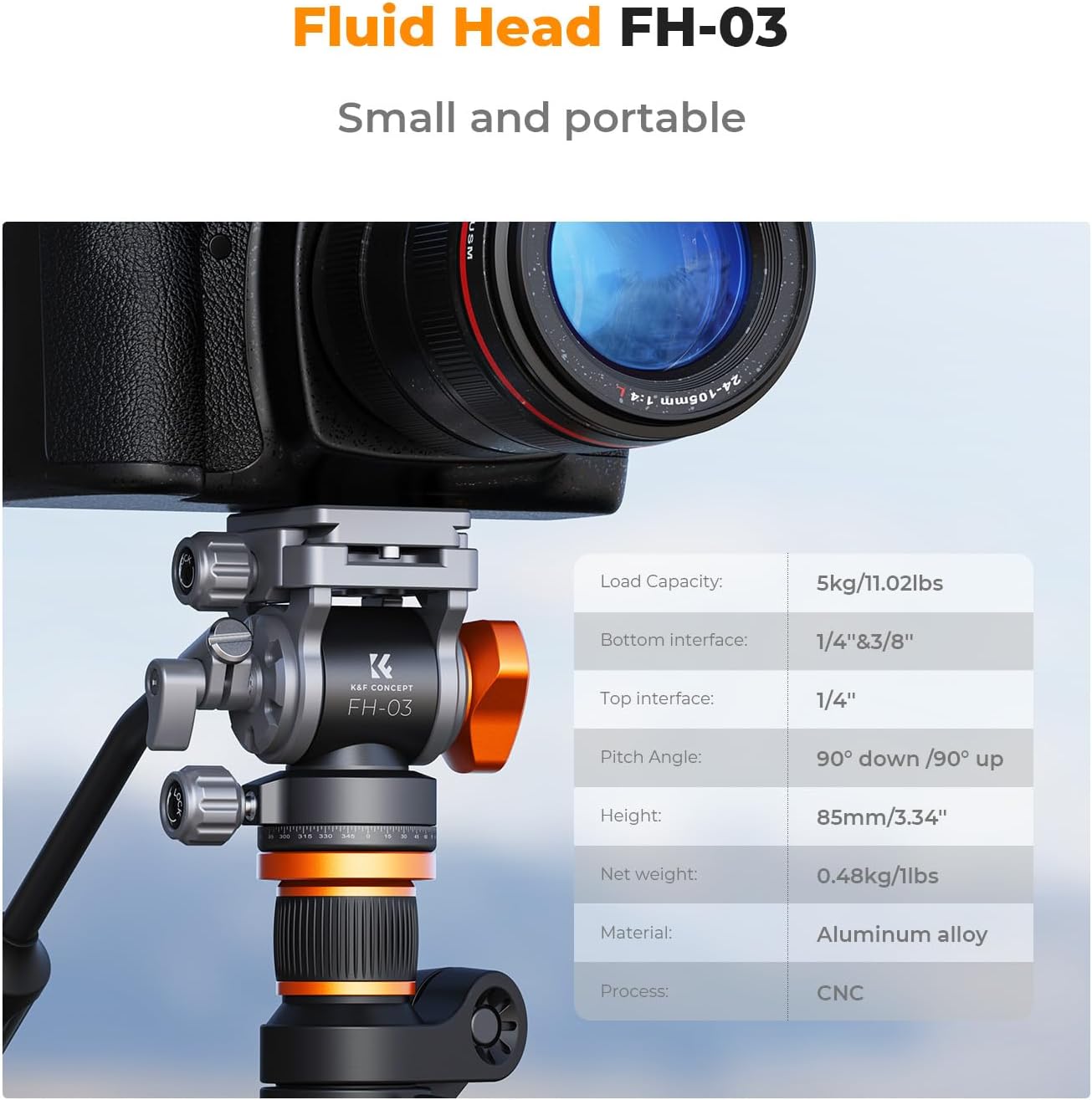
A fluid head is the mechanical joint that sits between your camera and your tripod legs — it controls tilt and pan while you’re shooting. A good one resists movement slightly, like stirring something thick, so that when you push the camera it starts and stops smoothly rather than lurching. A bad one either locks up or swings completely free, and the result is footage that looks amateurish no matter how expensive your camera body is. If you’ve ever watched a pan you recorded and thought “why does that look so rough?” — nine times out of ten, the head is the culprit, not your technique.
This article is for shooters who already understand the basic problem and are ready to make a deliberate upgrade decision. You’re running a mirrorless body — probably a Sony A7-series, a Fujifilm X-H2, or something comparable — maybe with a heavier zoom on the front, and your current head is either an OEM bundled unit or an aging budget piece that was fine for a kit lens and is now clearly out of its depth. You have roughly $100–$300 to spend, you don’t want to guess, and you want to know which of the three most-discussed options in this segment — K&F Concept, SIRUI, and SmallRig — is the right call for your specific situation.
What “Fluid Head” Actually Means at This Price Point
Let’s be precise about the technology before comparing brands, because the word “fluid” gets used loosely enough that it causes real purchasing mistakes.
A true fluid head uses viscous silicone fluid sealed inside cartridges that creates resistance — drag — as you move the head. That drag is what gives you the smooth, controlled motion that distinguishes professional footage. The drag is usually adjustable across several positions for both tilt and pan axes, so you can dial in more resistance for slow, deliberate moves with heavy lenses, or reduce it for faster event-style work.
At sub-$300 price points, you’re typically working with a hybrid: a spring-based counterbalance system paired with limited fluid drag on the tilt axis, and often much simpler friction control — or none at all — on the pan axis. As ProVideoCoalition documents in “Tripod Head Specifications Explained,” pan drag is the most commonly omitted axis at entry and mid-entry price points, which surprises buyers who assume “fluid head” means full dual-axis drag control. That is a critical distinction, and it is precisely where the three heads in this comparison diverge sharply.
The Three Contenders: K&F, SmallRig, and SIRUI Head to Head
The following sections break down each option by use case, real-world performance pattern, and the specific tradeoff that determines whether it’s right for your workflow.
K&F Concept KF09-Series — The Reliable Workhorse
K&F’s video fluid heads — particularly models in the KF09 lineup — have developed a consistent reputation in verified purchaser reviews aggregated on B&H Photo’s product pages: they hold. Owners describe buying K&F heads to replace OEM heads that could not manage tilt control under telephoto zoom loads. The pattern is consistent: the head holds heavier cameras stationary between shots where cheaper heads drift, and the multi-step counterbalance adjustment — typically three to five positions — is coarse but functional for bodies in the 1.5–3kg payload range with a mid-weight zoom attached.
The tilt drag on K&F heads at this tier is fluid-assisted and adjustable, which is where the value shows. For a shooter running a Sony A7 IV with a 70-200mm f/4 on the front, the K&F’s tilt control is a legitimate upgrade over a bundled tripod head. Owner accounts from B&H Photo’s verified review section note that the pan axis is also damped, which makes it genuinely usable for slow pans without the start-stop jerk that ruins event and documentary footage.
One practical note worth budgeting for: K&F heads in this lineup ship with a quick-release plate, but they are not Arca-Swiss compatible out of the box. The proprietary K&F plate system uses a different width standard. If your lenses, cage, or other support gear uses Arca-Swiss, you will need an aftermarket adapter plate — factor another $15–30 into your total cost before comparing sticker prices.
K&F KF09-series at a glance:
- Manufacturer-rated payload: 8–10kg depending on exact model
- Tilt drag: fluid-assisted, typically 3–5 adjustable steps
- Pan drag: fluid-damped, adjustable (model-dependent)
- Arca-Swiss compatibility: No (proprietary QR plate included)
Best for: Shooters running mirrorless bodies with mid-weight zooms who need reliable tilt and pan damping and are willing to add an Arca plate. Event, documentary, and interview work.
SIRUI
$149.00
In stock on Amazon
Check price on AmazonSmallRig AD-01 — Strong Tilt, Binary Pan
SmallRig’s AD-01 has strong brand recognition because SmallRig has earned trust in the cage and accessory ecosystem, and that goodwill carries over to their support gear. But owners who come to the AD-01 expecting full dual-axis drag adjustment consistently flag the same surprise: the pan axis is binary — it is either locked or fully free, with no variable drag adjustment in between.
This is not a defect; it is a design choice that SmallRig does not hide if you read the specifications carefully. But it changes the technique required to use the head effectively. A skilled operator can work with a lock-and-release pan by pre-loading tension with the wrist and releasing into the move — documentary operators do this constantly — but it is a learned skill. If you are expecting to set a medium pan drag and execute smooth, repeatable pans the way you would on a proper fluid drag system, the AD-01 will frustrate you until you adapt your technique. User discussion threads on dpreview covering the AD-01 surface this exact adjustment period repeatedly among users coming from drag-equipped heads.
The tilt axis on the AD-01 is genuinely fluid-damped and adjustable, and reviewers consistently praise it. For static shooting and tilt moves, it punches above its price. The pan limitation is the single decision factor that separates the shooters it is right for from those it is not. If a significant portion of your work involves on-the-fly panning — event coverage, run-and-gun documentary, sports — move to K&F or SIRUI instead.
SmallRig AD-01 at a glance:
- Tilt drag: fluid-damped, adjustable
- Pan drag: binary lock/release only — no variable adjustment
- Ecosystem: Arca-Swiss compatible plate included on current versions
- Price: typically the lowest of the three heads compared here
Best for: Product table work, locked-off interviews, macro setups, and any workflow where pan moves are rare or secondary. SmallRig cage and accessory users who want ecosystem integration.
K&F
$49.99
In stock on Amazon
Check price on AmazonSIRUI SQ75 — The Most Refined Dual-Axis System in This Band
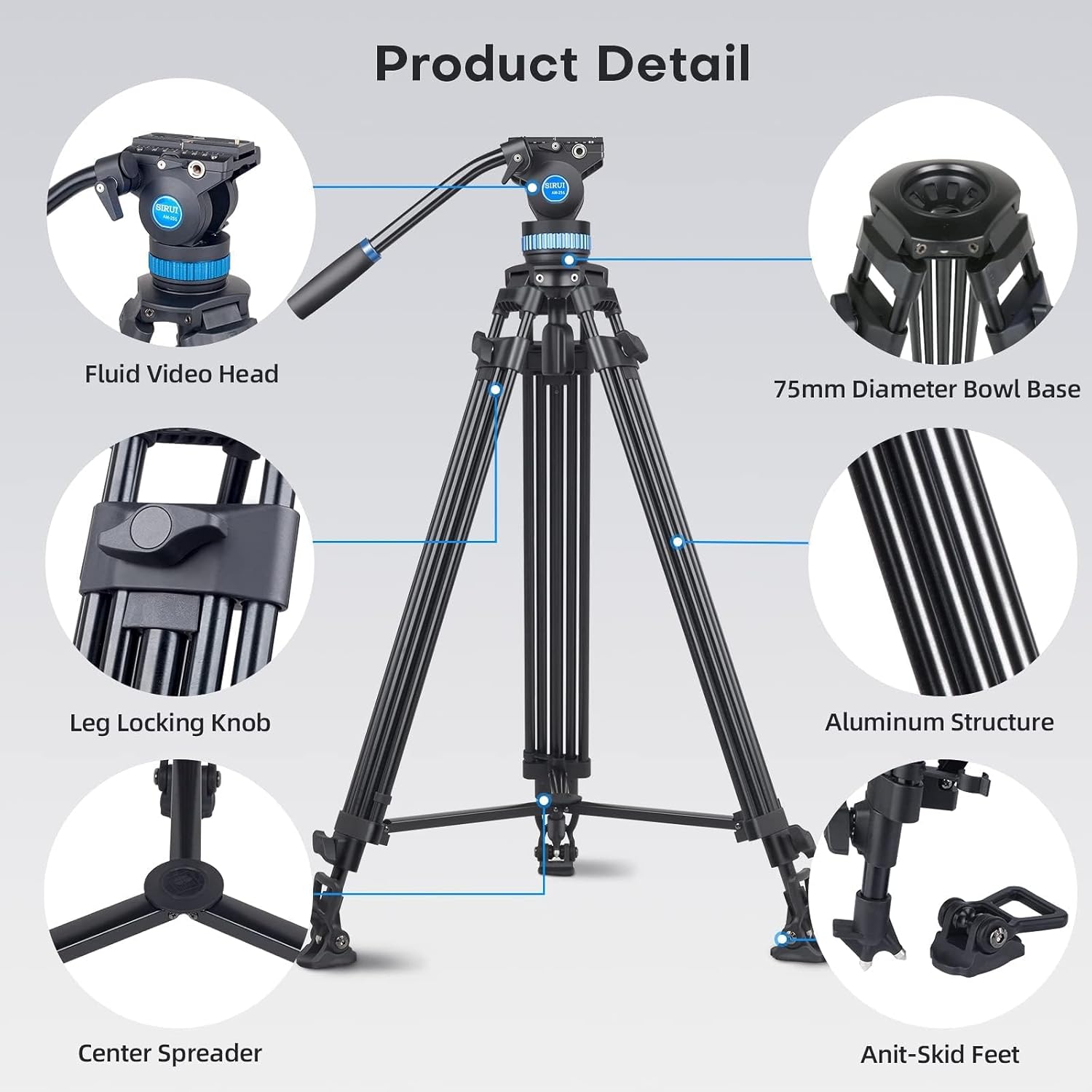
The SIRUI SQ75 sits at the upper edge of this price band and represents a more considered engineering approach: it uses a proper stepped counterbalance system and dual-axis fluid drag on both tilt and pan axes. Shooter feedback across aggregated reviews describes the counterbalance as working in practice rather than just on paper. For mirrorless bodies with mid-weight zooms, owners report that you can actually dial out the nose-dive tendency that plagues cheaper heads without fighting the system.
PremiumBeat’s article “Understanding Fluid Head Drag and Why It Matters for Smooth Video” draws a clear distinction between heads with functional stepped counterbalance and those where the spring tension is either too coarse or too weak to genuinely null a telephoto load — based on owner reports, the SQ75 lands on the right side of that line.
There is a quality control note worth naming directly: a documented pattern in owner reviews shows a leg clip issue on some SIRUI tripod kits — specifically, broken or improperly seated leg clips on arrival. The meaningful part of this story is SIRUI’s response: customer service ships replacement clips promptly without requiring a full unit return. That matters for a working professional who cannot wait weeks for a warranty resolution. If you are sourcing the SQ75 as a head-only purchase for an existing set of legs, this concern is substantially reduced — the head itself draws no equivalent QC complaints in the reviews surveyed.
SIRUI SQ75 at a glance:
- Tilt drag: fluid-damped, stepped adjustment
- Pan drag: fluid-damped, stepped adjustment — genuine dual-axis control
- Counterbalance: stepped positions, owner-reported as functional for mirrorless-plus-zoom
- Price: upper range of the sub-$300 segment
Best for: Shooters who need real dual-axis fluid drag for smooth pans and tilts, are running mirrorless bodies with heavier zooms, and want the most refined head performance in this price band without crossing into Manfrotto 500-series territory.
SmallRig
$319.99
In stock on Amazon
Check price on AmazonThe SmallRig FreeBlazer AD-100: Full-Kit Consideration
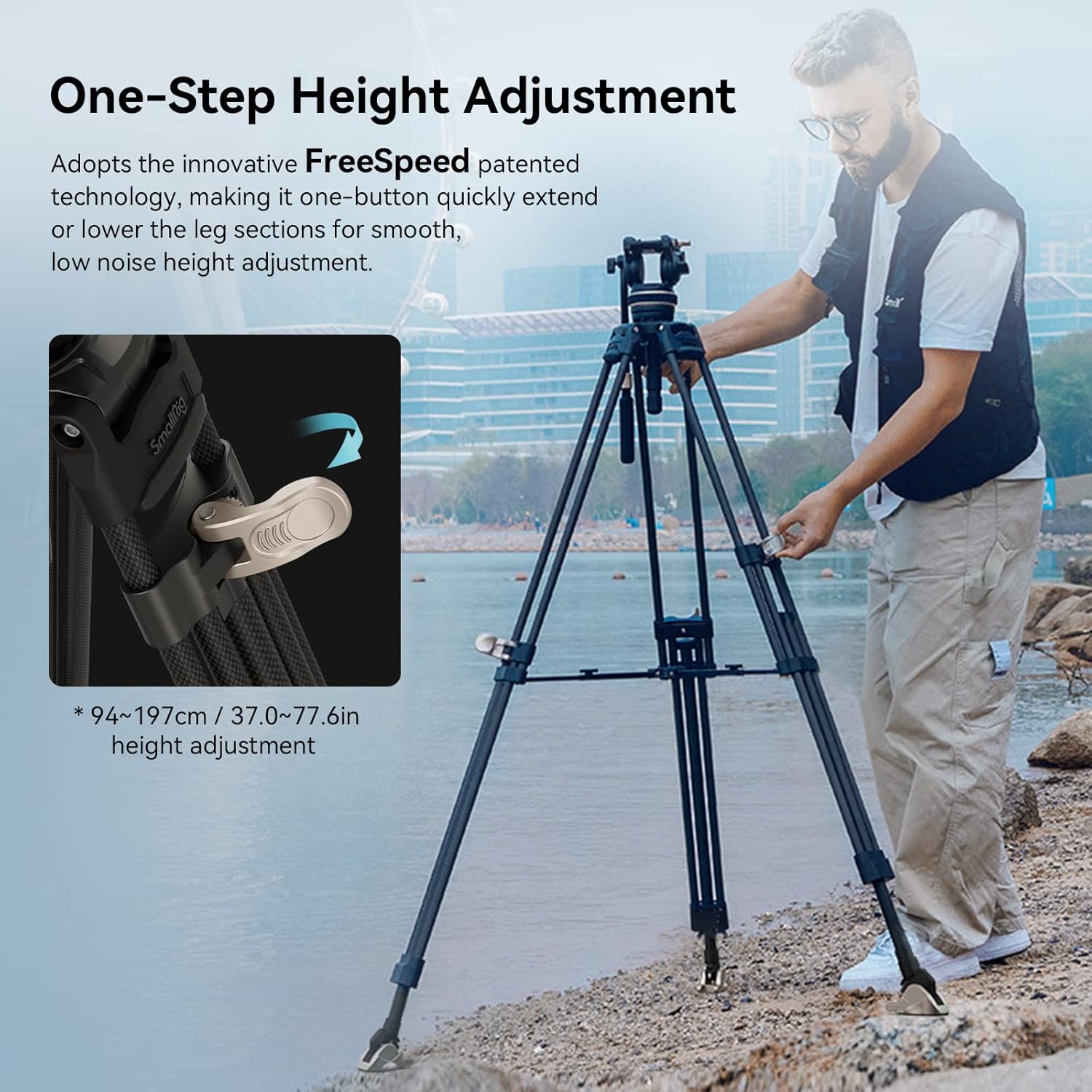
The SmallRig FreeBlazer AD-100 warrants its own section because it is a different purchase category — a complete tripod system rather than a head upgrade — and it attracts buyers making a direct weight-versus-cost tradeoff between its aluminum and carbon fiber versions.
Owners running the carbon fiber FreeBlazer in direct comparisons describe it favorably for event and travel use. The single-latch leg system gets consistent praise for speed when you are breaking down and rebuilding a rig multiple times over a shoot day. Reviewers doing event work cite this as a practical speed advantage that shows up in real workflows, not just on a spec sheet.
Two owner-reported issues are worth building into your decision. First, the aluminum SMALLRIG x Potato Jet TRIBEX SE variant — a related model in SmallRig’s lineup — has been flagged by at least one reviewer as heavier than expected, with weight not prominently disclosed in pre-purchase marketing materials. If you are sourcing specifically for travel, verify the carbon fiber spec sheet independently and do not assume the aluminum version is a close substitute. Second, a hydraulic fluid leak on first use has been reported on the aluminum variant. As NoFilmSchool notes in its coverage of fluid head reliability, a first-use fluid leak indicates a seal failure at the manufacturing stage and should trigger an immediate return rather than a wait-and-see approach.
The carbon fiber AD-100 avoids these specific concerns in the reviews surveyed. Treat the aluminum and carbon fiber versions as separate products with separate risk profiles before committing.
SIRUI
$149.00
In stock on Amazon
Check price on AmazonWill Any of These Hold a Sony A7-Series with a Heavy Zoom?
The honest answer is: it depends on how you define “heavy zoom.”
A Sony A7 IV body is approximately 659g. Add a Sony 70-200mm f/2.8 GM II (approximately 1,045g) plus a basic cage (roughly 300–400g), and you are at approximately 2–2.1kg total payload. All three heads in this comparison are manufacturer-rated well above that number.
The relevant question is not whether they hold the weight — they will — but whether the counterbalance system is refined enough to null out the front-heavy bias of a telephoto zoom without requiring maximum spring tension. Cinema5d’s fluid head roundup analysis, “Fluid Head Roundup: What the Numbers Actually Mean,” makes this point precisely: counterbalance systems at the sub-$300 tier are typically designed around two to three discrete payload ranges rather than continuous adjustment, which means some camera-lens combinations will sit between positions and require technique compensation. K&F and SIRUI owners with similar configurations report satisfactory outcomes. The SmallRig AD-01 performs well on the tilt axis for this payload; the pan limitation applies regardless of what camera is mounted.
Frequently Asked Questions
Is the K&F fluid head Arca-Swiss compatible out of the box? No. K&F heads in this lineup ship with a proprietary quick-release plate that does not conform to the Arca-Swiss standard. If your lenses use an Arca-Swiss foot or your cage has an Arca rail, you will need an aftermarket plate. Budget for it before comparing sticker prices.
Does the SmallRig AD-01 have variable pan friction or just a lock? Just a lock. The pan axis on the AD-01 is binary — locked or fully free. There is no variable drag adjustment on the pan axis. The tilt axis is fluid-damped and adjustable. This is the defining tradeoff of the head and should be the first question you answer before purchasing.
How does the SIRUI SQ75 counterbalance system work in practice? The SQ75 uses a stepped spring counterbalance with discrete positions calibrated to payload ranges. Owners report it works as advertised for mirrorless bodies with mid-weight zooms — you select the step closest to your camera’s front-heavy load and the tilt axis stabilizes without constant drift. It is not infinitely adjustable, but it is more practically functional than single-spring designs at this price point.
Will these fluid heads hold a Sony A7-series with a heavy zoom lens without drifting? Yes, for typical mirrorless-plus-zoom configurations in the 1.5–2.5kg range. All three heads are manufacturer-rated above this payload. The real variable is counterbalance quality, not raw capacity. K&F and SIRUI owners report the best outcomes; the SmallRig AD-01 performs well on tilt but requires technique management for panning moves.
What happens if a SIRUI tripod arrives with a broken leg clip? Contact SIRUI customer service directly. The documented owner experience is that SIRUI ships replacement clips promptly without requiring you to return the full unit. The resolution path is well established based on aggregated owner reports.
Is the SmallRig FreeBlazer carbon fiber version meaningfully lighter than the aluminum version? Based on manufacturer specs and owner reports, yes — the carbon fiber version carries a meaningful weight advantage, which is the primary reason to pay the premium. The aluminum TRIBEX SE variant has been flagged by reviewers as heavier than expected with limited pre-sale weight disclosure. If weight is your purchase driver, verify the carbon fiber spec sheet before buying and do not treat the two versions as close substitutes.
The Decision Rule
If you shoot static setups, interviews, or tilt-heavy work and run a mirrorless body with a zoom up to 2.5kg: the K&F fluid head is the safest upgrade at this price — reliable tilt drag, usable pan damping, just budget for an Arca plate.
If pan drag does not matter to your workflow — product table shooting, locked-off interviews, macro work — and you want SmallRig ecosystem compatibility: the SmallRig AD-01 delivers strong tilt performance at a lower price, with the pan axis limitation fully understood going in.
If you want the most refined dual-axis system in this sub-$300 band: the SIRUI SQ75 is the serious shooter’s pick — real fluid drag on both axes, a functional stepped counterbalance, and a service relationship that handles QC exceptions without bureaucratic friction.
And if you are building a complete travel or event kit where single-latch leg speed matters as much as the head: the SmallRig FreeBlazer AD-100 carbon fiber is the system to evaluate — but treat the aluminum TRIBEX SE variant as a separate product with its own distinct risk profile before you commit.
Browse K&F fluid heads, the SmallRig AD-01, the SmallRig FreeBlazer AD-100, and SIRUI SQ75 options by name to compare current configurations and bundle availability.