May 2, 2026 • Declan Merritt • 9 min reading time • Prices verified June 17, 2026
Quick Release Plates Are Not Universal — Here's What Actually Fits What
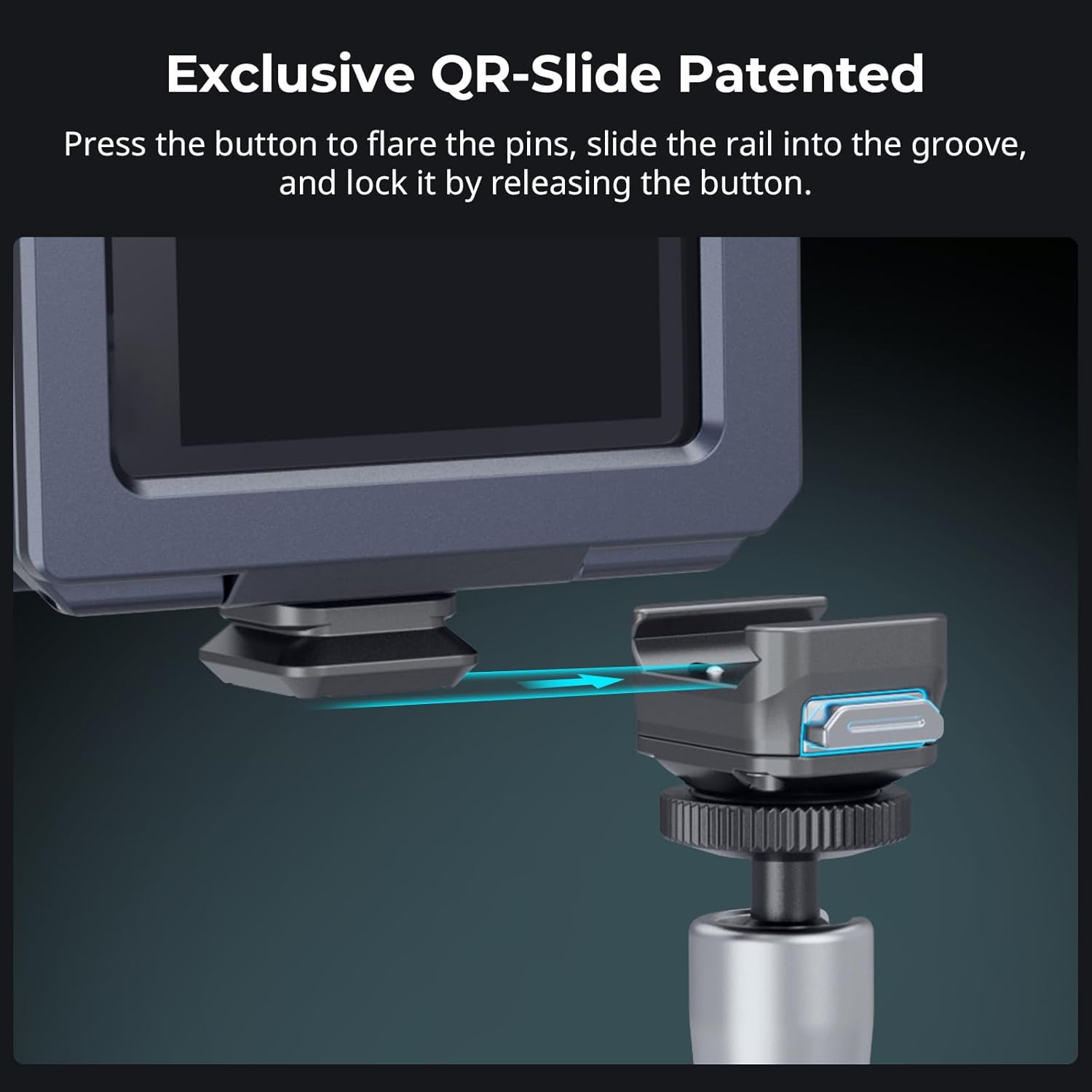
A quick release plate is the small flat bracket that attaches to the bottom of your camera and clicks into your tripod head, slider, or gimbal — it’s how you mount and unmount your camera quickly without unscrewing anything by hand every time. The problem is that “quick release” is not a single standard. It’s a category, and inside that category there are at least half a dozen competing systems that look similar, feel similar, and are almost entirely incompatible with each other. Buy the wrong plate — or assume your new fluid head takes the same plate as your old one — and you’re either improvising on set with gaffer tape or sending the head back. This guide breaks down the major standards, names who uses what, and gives you a clear decision framework so you’re not surprised mid-production.
The Four Systems You Will Actually Encounter
Arca-Swiss (the one everyone is migrating toward)
Arca-Swiss is a Swiss camera manufacturer whose dovetail clamp design became the de facto open standard for precision camera support. The system uses a dovetail-profile plate — typically 38mm wide — that slides into a clamp and locks via a knob or lever. Because Arca-Swiss never aggressively licensed or policed the design, dozens of third-party manufacturers adopted it, which is both its strength and its complication.
The strength: nearly every serious ball head, L-bracket system, follow-focus baseplate, and high-end fluid head clamp sold today offers an Arca-Swiss-compatible option. Kirk Enterprises, Really Right Stuff, Markins, and Sunwayfoto all build to this profile. The complication: “Arca-Swiss compatible” is not a precision tolerance specification — it’s a rough profile match. Plate width, clamp jaw depth, and rail geometry vary enough between manufacturers that some combinations technically fit but feel sloppy, or won’t lock securely. ProVideoCoalition’s coverage of camera support standards notes that clamp-to-plate fit can vary by as much as 0.5–1mm between budget and precision manufacturers, which matters on a $4,000 head carrying a 6kg payload.
Who should standardize on Arca-Swiss: Anyone building a kit around a high-end ball head, an L-bracket system, or a cinema rig using Wooden Camera or Bright Tangerine baseplate solutions. Most Tilta accessories and a growing number of Edelkrone attachments ship with Arca-Swiss clamps as the default. If you’re buying into a modular ecosystem in 2026, this is the baseline to build around.
Manfrotto RC2 and 501PL (the most common “legacy” system)
Manfrotto’s RC2 system ships on a huge installed base of consumer and prosumer tripod heads — the 496, 804, and 496RC2 heads all use it. The plate is a rectangular block with a central pin-and-button locking mechanism. It’s not a dovetail; it’s a drop-in-and-click system.
The 501PL plate, used on Manfrotto’s fluid heads like the 501 and 504 series, is a longer version of the same family designed to offer more fore-aft balance adjustment for heavier camera setups. Cinema5D’s tripod head explainer correctly distinguishes these two as related but not interchangeable — a 501PL plate will not click into an RC2 clamp cleanly, and vice versa, despite both being “Manfrotto.”
The practitioner’s trap with Manfrotto: You own a Manfrotto 504HD fluid head (501PL system) and you add a Manfrotto ball head for a second camera body — and you buy RC2 plates for that body. Now your plates don’t cross over. It’s a $12–$30 plate, but on a fast-moving commercial shoot, fumbling through a bag looking for the right plate costs real time. Operators working across Manfrotto’s own product line should audit their plate inventory carefully before assuming compatibility.
DJI RS Series (proprietary, but deliberate)
DJI’s RS 3, RS 3 Pro, and RS 3 Mini gimbals use their own mounting plate format: a longer, wider format plate with a locking screw and alignment pin. DJI has made the system more consistent across the RS lineup since the RS 2, and many operators appreciate the fore-aft travel built into the plate carrier — it makes balancing a camera-lens combination significantly faster than fighting a short plate.
B&H Photo’s gimbal accessory listings confirm that DJI-format plates are not Arca-Swiss compatible without an adapter, and third-party adapter plates exist at various quality levels. The meaningful tradeoff: DJI’s plate system integrates cleanly with DJI’s own quick-detach mechanism on the RS 3 Pro, giving you a fast single-lever release that independent Arca-Swiss clamps don’t always replicate. If the RS 3 Pro is your primary gimbal, using DJI-native plates on your camera bodies for gimbal work — and Arca-Swiss for everything else — is a practical if imperfect compromise that many run-and-gun operators have landed on, per aggregated operator reviews.
Sachtler and ARRI Rosette / Flat Base (the broadcast standard)
At the broadcast and cinema-class tier, Sachtler’s fluid heads (the Aktiv series, the FSB line) and ARRI heads (the Fluid Head and Ronford-Baker systems) use their own flat-base or bowl-mount dovetail standards. Sachtler’s sliding camera plate — the DV 75 and Touch & Go systems — is a long, flat dovetail that provides significant balance travel and is designed for broadcast camera packages running 4–12kg payloads.
ARRI’s system is dimensionally different and not cross-compatible with Sachtler without an adapter plate, which exist from third parties but add thickness and can shift your camera’s center of gravity in ways that complicate counterbalance setup. No Film School’s guide to camera support flags this as a common mistake when operators move from Sachtler to ARRI rental packages: the head changes, the plate format changes, and if you haven’t flagged this in pre-production the first hour of the shoot day gets painful.
By the Numbers
| System | Profile Type | Typical Width | Common On | Cross-Compatible? |
|---|---|---|---|---|
| Arca-Swiss | Dovetail | 38mm nominal | Ball heads, L-brackets, Tilta, Wooden Camera | With caveats (tolerance varies) |
| Manfrotto RC2 | Drop-in pin | ~50mm block | 496, 804 heads | No |
| Manfrotto 501PL | Long flat | ~65mm | 501, 504 fluid heads | No (same brand, different system) |
| DJI RS Series | Proprietary flat | ~70mm | RS 3, RS 3 Pro, RS 3 Mini | No (adapter required) |
| Sachtler Touch & Go | Long dovetail | ~90mm | Aktiv, FSB series | No |
Where This Actually Costs You Money
The payload math problem
Every plate adds thickness and shifts your camera’s center of gravity forward, backward, or upward. On a consumer ball head this is barely noticeable. On a fluid head with a calibrated counterbalance system, a plate swap that changes your camera height by 6–8mm can push you into a different counterbalance range. Cinema5D’s fluid head coverage notes that this is especially punishing on heads like the Sachtler Aktiv series, where counterbalance is set in discrete steps — a plate change might mean you’re now between counterbalance positions, producing the creeping-tilt behavior that ruins slow push-ins.
If you’re renting an ARRI or Sachtler head for a single-day commercial shoot and you show up with your own Arca-Swiss plates and an adapter, build 20–30 minutes into your morning to re-balance from scratch. The rental head’s counterbalance was not calibrated for your plate stack.
Ecosystem lock-in is real here too
Edelkrone’s modular system uses its own mounting interface for the SliderPLUS and Motion Module combinations. Rhino Camera Gear’s Arc slider uses a standard Arca-Swiss clamp at the carriage but the carriage-to-motor interface is proprietary. These distinctions matter when you’re deciding whether to add a second carriage or mix equipment across brands. ProVideoCoalition’s support-standards coverage emphasizes that the “compatible” labeling on third-party plates frequently refers to the plate profile only — not to the locking lever mechanism, the retention pin pattern, or the plate length required for balance travel.
The adapter plate trap
Adapter plates that bridge, say, Manfrotto RC2 to Arca-Swiss exist and are sold widely. They work. But they add 8–14mm of height to your camera stack, which affects matte box rod positioning, follow focus gear engagement, and on some shorter fluid heads, clearance between the lens and the head’s panning platform. If you’re running a matte box system from Vocas or Bright Tangerine on a rod support that’s calibrated to a specific camera height, an adapter plate is not a transparent fix — it’s a geometry change that propagates through the whole rig.
Making the Decision: If X, Then Y
If your primary support is a ball head or L-bracket system and you’re not yet invested in any one ecosystem: Standardize on Arca-Swiss now. Buy quality clamps (Kirk, Really Right Stuff, or Markins-tier) rather than the budget options, because the tolerance matters. B&H Photo’s camera support listings give you a clear view of what’s stocking in 2026 — filter by Arca-Swiss compatible and you’ll find plates for nearly every camera body in current production.
If you own a Manfrotto fluid head and shoot primarily video: Stay on the 501PL system for that head, and don’t try to force Arca-Swiss cross-compatibility unless you have a clear reason. The 501PL’s fore-aft travel is genuinely useful for video balance, and the system works reliably. Just audit your inventory so you’re not mixing RC2 and 501PL plates in the same bag.
If the DJI RS 3 Pro is your primary gimbal: Use DJI-native plates on camera bodies assigned to gimbal work. For everything else — slider, fluid head, tripod — run Arca-Swiss. Accept that you have two plate formats in your kit; it’s the operational reality for most RS-series gimbal operators, and it’s more stable than relying on adapter plates under load.
If you’re renting broadcast-tier heads (Sachtler, ARRI) for a gig: Call the rental house before the shoot day and confirm the plate format on the specific head you’re getting. Ask if they have spare plates in that format that can be pre-mounted on your camera bodies before pickup. This is a standard ask; rental house buyers at reputable shops will have spares. Per B&H Photo’s rental-tier product documentation, most Sachtler and ARRI heads in rental circulation ship with at least two plates — confirm this is included in your quote.
If you’re building a package to sell or rent yourself: Arca-Swiss standardization makes your package more rentable because clients are more likely to arrive with compatible plates or L-brackets. Proprietary systems narrow your potential client base.
Your Next Step
Before your next support purchase, pull every plate you currently own and identify its system. If you have three different formats across your kit, you have a problem that will eventually surface on a shoot. The fix is usually inexpensive — $20–$80 in additional plates of the right format — but only if you identify the gap in advance rather than on location.
Start with B&H Photo’s quick release plate category (bhphotovideo.com) and filter by the system your primary fluid head takes. If you’re not sure which system your head uses, the head’s product page will list it under “quick release type” in the specifications — and if it doesn’t, the manufacturer’s product documentation will. Get that sorted before you evaluate any new head, slider, or gimbal purchase. Plate compatibility is a $30 problem that becomes a $300 problem if it’s the reason you return a head.