September 3, 2026 • Declan Merritt • 11 min reading time • Prices verified June 17, 2026
Shoulder Rig Systems Compared: NEEWER, SmallRig, Tilta, and Cam Caddie for DSLR and Mirrorless
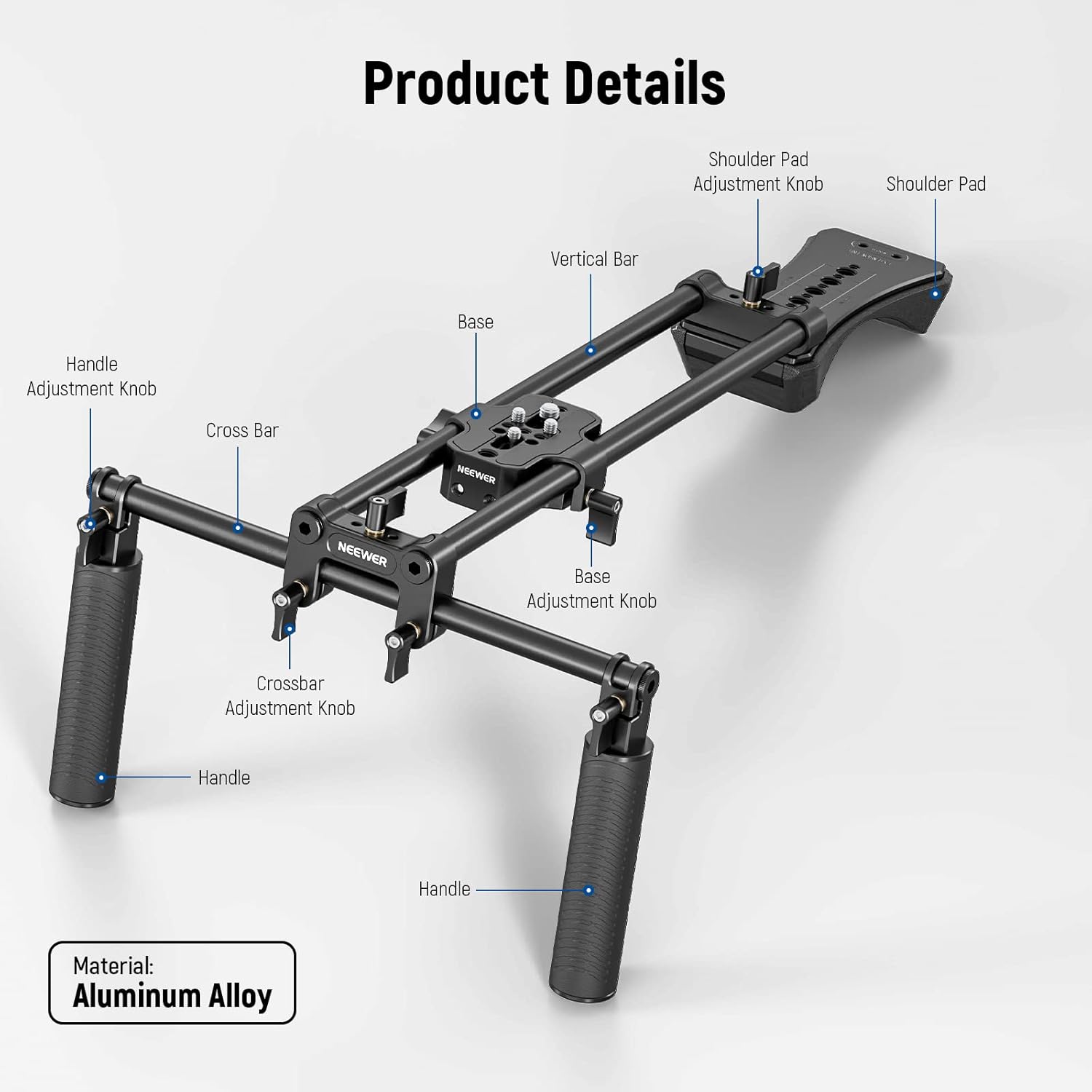
A shoulder rig is exactly what it sounds like: a frame that braces your camera against your shoulder and chest, distributing its weight across your body instead of making your wrists and forearms carry everything. If you’ve ever tried to hold a mirrorless camera steady for ninety minutes of event coverage and felt that specific burning pain between your shoulder blades, you already understand the problem these rigs solve. The upside is real ergonomic relief and a more stable, documentary-style image. The catch is that not every rig fits every body — or every camera — and buying the wrong one means you’re fighting the rig instead of concentrating on the shot. This comparison breaks down four rigs that regularly show up in practitioner conversations: NEEWER’s modular shoulder kit, SmallRig’s 2896 rig system, the Tilta Lightweight Shoulder Rig, and the Cam Caddie Scorpion EX. We’ll name the tradeoffs explicitly, flag the real safety issue one of these has, and give you a clear decision rule at the end.
| EDITOR'S PICKTilta Lightweight Shoulder Rig | Mid-tierSMALLRIG Universal Basic Camera… | Budget pickCam Caddie® Scorpion EX Hands F… | |
|---|---|---|---|
| Foldable | ✓ | — | — |
| Material | Aviation aluminum | — | — |
| Rod mount | 15mm rods | — | — |
| Quick-release | ✓ dual QR | — | — |
| Phone mount | — | — | ✓ |
| GoPro mount | — | — | ✓ |
| Price | $318.75 | $99.99 | $49.99 |
| See on Amazon → | See on Amazon → | See on Amazon → |
What You’re Actually Comparing (and Why It’s Not Just Price)
Before the product-by-product breakdown, it’s worth naming what actually determines whether a shoulder rig works for your shoot. StudioBinder’s “Camera Support Systems Explained” identifies the variables that matter most: balance point relative to your body’s center of gravity, pad geometry (width and length of the shoulder contact surface), handlebar rigidity under load, and modularity — whether the rig can grow with your build as you add a follow focus, matte box, or monitor.
Price in this segment runs roughly $80 to $350 at retail as of mid-2026. That range sounds wide, but it compresses quickly when you account for what’s included. A rig with a “free” matte box that doesn’t actually function as a matte box isn’t cheaper — it’s just bundled differently.
Approximate spec-sheet comparison across the four rigs:
| Rig | Shoulder Pad Width | Rod Standard | Matte Box Included | Est. Street Price |
|---|---|---|---|---|
| NEEWER Shoulder Kit | ~100mm | 15mm | Yes (decorative-grade) | ~$90–$130 |
| SmallRig 2896 | ~95mm | 15mm | No | ~$150–$200 |
| Tilta Lightweight | ~110mm | 15mm | No | ~$200–$280 |
| Cam Caddie Scorpion EX | ~120mm | 15mm | No | ~$250–$320 |
Sources: published manufacturer spec sheets and aggregated retailer listings.
NEEWER Shoulder Kit: The Value Case, With One Asterisk
Cam
$49.99
In stock on Amazon
Check price on AmazonNEEWER’s shoulder rig wins points for making a complete-looking kit accessible at an entry price that feels almost irresponsible. In direct crew-preference comparisons against Filmcity-branded equivalents documented across practitioner forums and editorial reviews, NEEWER came out ahead on build feel and usability. That’s meaningful — it tells you the construction quality clears a bar that isn’t just about aesthetics.
The asterisk is the matte box. A matte box is a rectangular shade and filter holder that mounts in front of your lens to control light flare and allow you to slot in graduated neutral-density filters during a shoot. The one included with NEEWER’s kit is consistently described by reviewers as decorative-grade at best. It doesn’t seat filters securely, the flaps don’t properly flag stray light, and it’s not sized for industry-standard 4×4 or 4×5.65 filter systems. If you plan to use it as an actual optical tool in production, don’t. Budget separately for a real matte box — options from Vocas, Bright Tangerine, and Wooden Camera all mount to standard 15mm rods — and treat the NEEWER version as a placeholder that keeps the rods balanced during early shoots.
The shoulder pad is adequate for average-framed shooters. For longer days, reviewers note it holds up better than expected at the price point, particularly for run-and-gun documentary work where you’re moving constantly rather than holding a static frame.
Best for: Shooters building a first production kit who need to spread budget across body, glass, and support. NEEWER gives you a functional shoulder-mount platform. Just don’t let the matte box fool you into thinking optical filtration is covered.
Cam
$49.99
In stock on Amazon
Check price on AmazonSmallRig 2896: Solid Bones, Narrow Pad
SMALLRIG
$99.99
In stock on Amazon
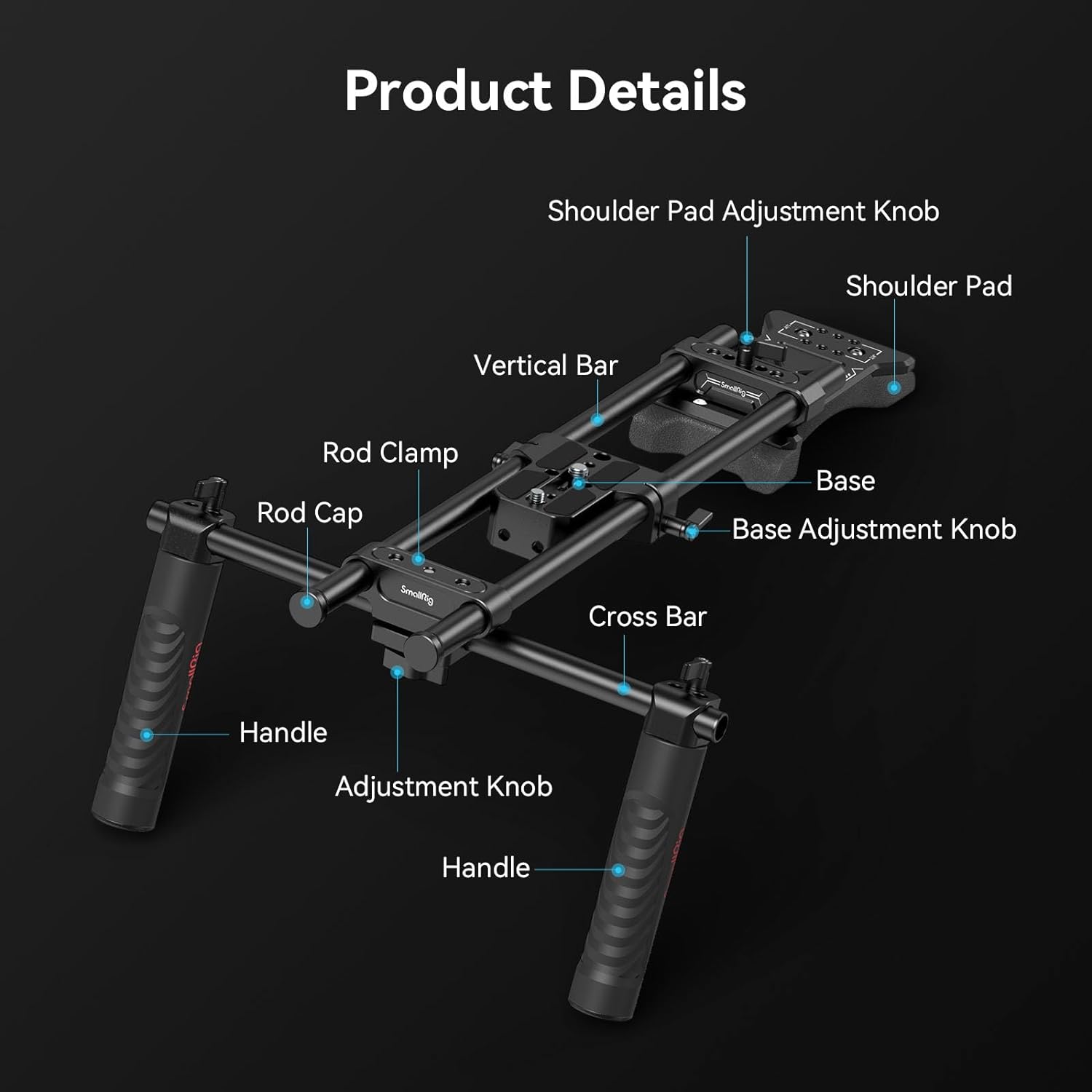
Check price on AmazonSmallRig has earned a reputation across the industry — confirmed by editorial coverage at both No Film School and Cinema5D — for modular accessories that are genuinely production-capable and integrate cleanly into larger cage ecosystems. The 2896 shoulder rig system continues that tradition in most respects. The rod clamps are tight, the cheese plates accept standard cold shoe and ARRI-pattern accessories without drama, and the overall rigidity is noticeably better than the NEEWER kit.
The consistent complaint from reviewers is the shoulder pad: it’s described repeatedly as too narrow and too short for larger-framed shooters. If you’re above average height or have broader shoulders, you will feel the pad digging in or shifting during extended takes rather than distributing load comfortably. This isn’t a build-quality defect — the pad is well-made — it’s a geometry problem. The contact surface simply doesn’t have enough real estate to seat properly on a bigger frame.
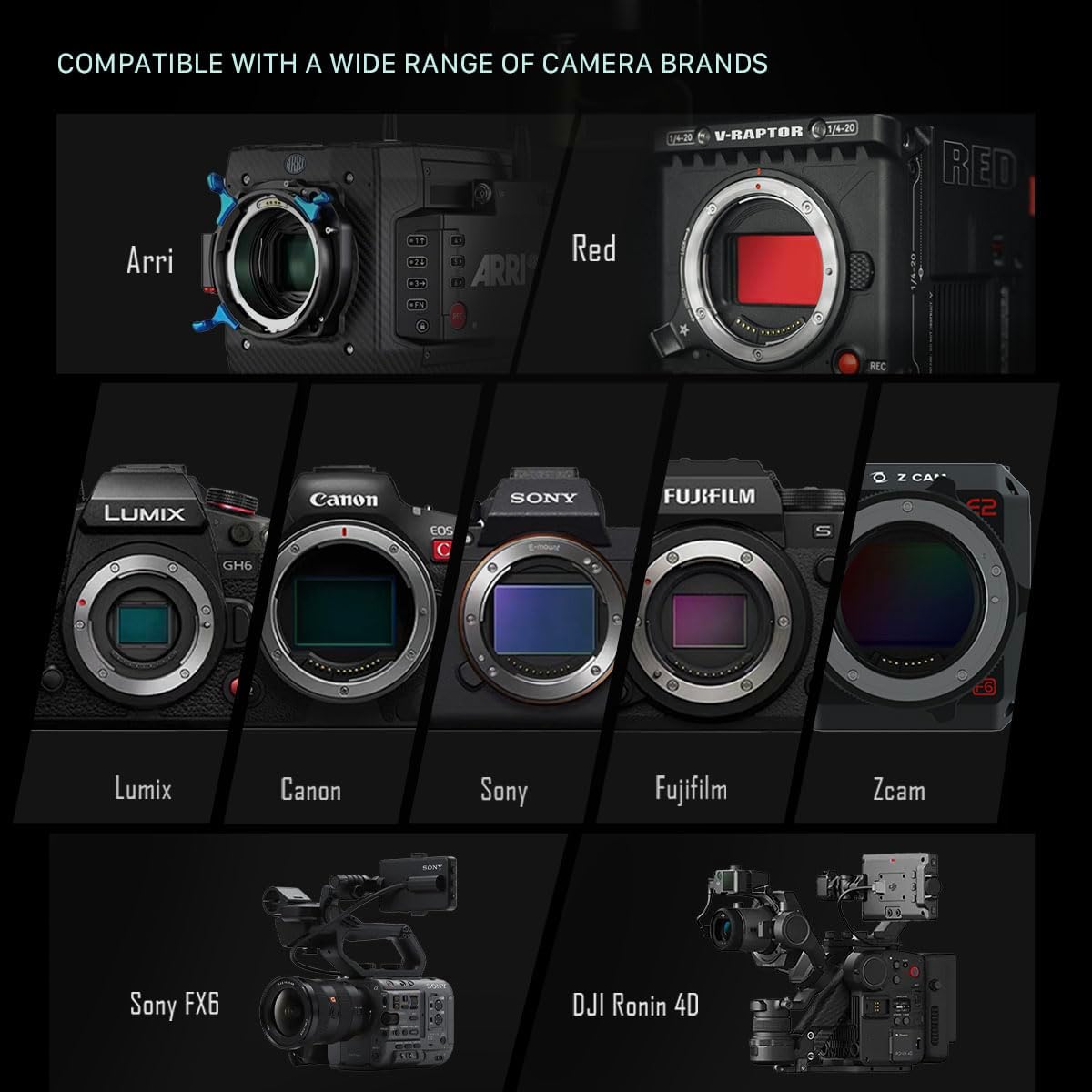
The important question for SmallRig buyers with mirrorless setups: does the 2896 fit a Sony A7-series body with a cage already attached? The answer is yes, with caveats. SmallRig’s own cage ecosystem is designed to mate cleanly with their shoulder rigs, so an A7 IV or A7R V in a SmallRig cage will thread onto the 2896’s top plate without adapter gymnastics. Third-party cages typically require you to verify rod and baseplate alignment independently, but reviewers report success with most standard 15mm rod cages. See the FAQ section below for more detail.
Best for: Shooters already inside the SmallRig accessory ecosystem whose builds are on the smaller or average side. Larger-framed shooters should handle one before committing.
SMALLRIG
$99.99
In stock on Amazon
Check price on AmazonTilta Lightweight Shoulder Rig: A Safety Issue You Need to Know About
SMALLRIG
$99.99
In stock on Amazon
Check price on AmazonTilta’s modular ecosystem — covered in depth by Cinema5D and in PremiumBeat’s stabilization hardware buyer guidance — is genuinely impressive in its scope. The Tilta Lightweight Shoulder Rig looks the part and offers solid rod integration with the broader Tilta Nucleus follow focus and cage system. For shooters already running Tilta cages on their A7 or BMPCC bodies, the ecosystem continuity is appealing.
There is a safety issue that reviewers have flagged clearly, and this article is surfacing it prominently: the handlebar connector — the clamp joint where the top handle assembly meets the main rig body — has been reported to twist under minimal force, losing its lock without warning. One reviewer described nearly dropping their camera because of this failure point. Whether this is a manufacturing defect or user error is addressed in the FAQ section, but the pattern across multiple independent reviewer reports makes it a structural concern, not an isolated incident.
This matters more than a typical comfort complaint because a dropped camera-and-rig assembly — particularly a mirrorless body with an attached lens and cage — can represent $2,000 to $6,000 in gear and a shattered production day. Operators in long-run reviews note that applying thread-lock compound to the handlebar connector and re-torquing it before each shoot day substantially reduces the risk. That’s not a fix you should have to apply to a production rig, but it’s the field solution being used.
Best for: Shooters already committed to the Tilta ecosystem who are willing to incorporate the handlebar check as a pre-shoot ritual. If you’re not already locked into Tilta, this failure point is reason enough to evaluate the Cam Caddie or SmallRig alternatives first.
SMALLRIG
$99.99
In stock on Amazon
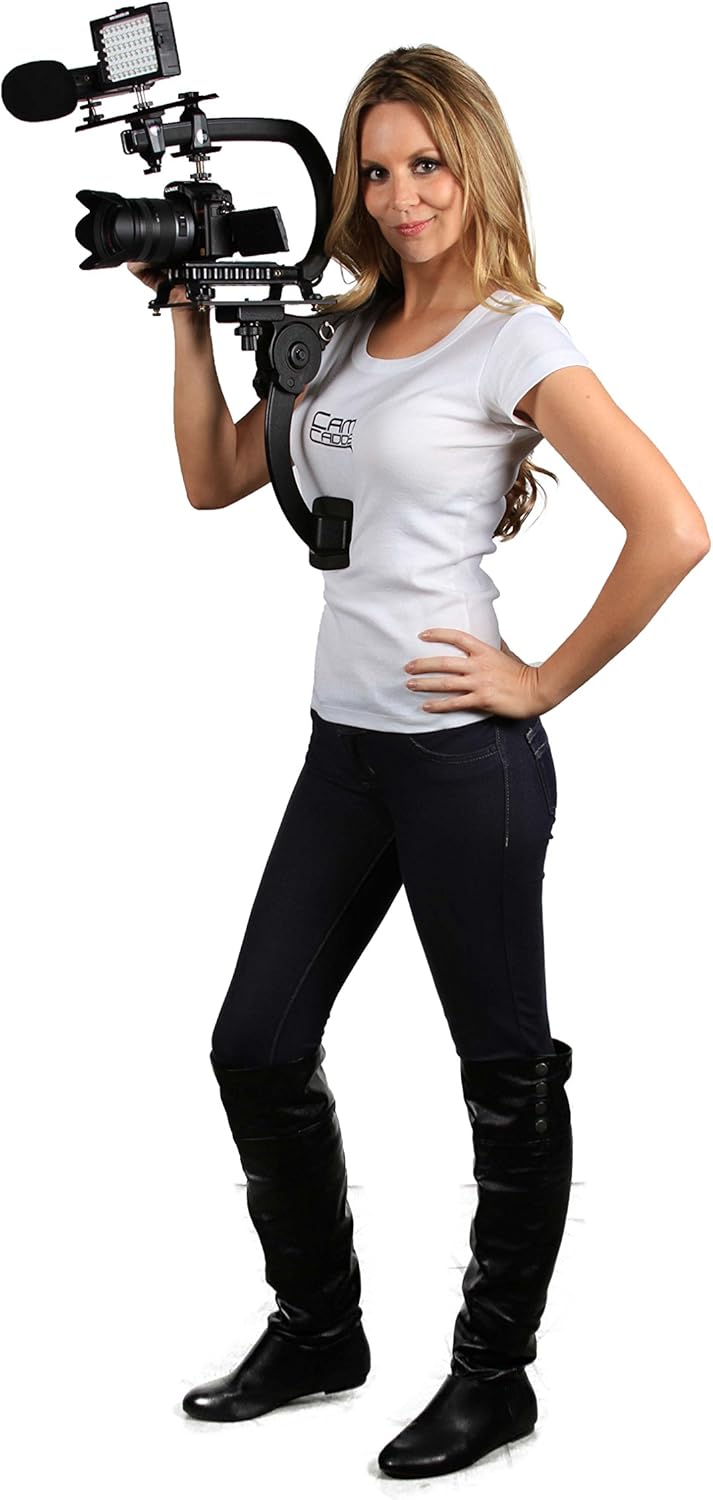
Check price on AmazonCam Caddie Scorpion EX: The Ergonomic Leader
Tilta
$318.75
In stock on Amazon
Check price on AmazonThe Cam Caddie Scorpion EX doesn’t have the name recognition of SmallRig or Tilta outside of event and documentary circles, but reviewers consistently rate its ergonomic geometry as the strongest of this group. The shoulder pad is wider and longer than any of the competing options here, and it seats against the body in a way that reviewers describe as genuinely stable — not just “good for the price.”
One reviewer account that stands out: a photographer with a fractured elbow specifically credits the Scorpion EX with allowing them to complete a full event shooting season. That’s a concrete, high-stakes ergonomic test. The rig’s weight distribution shifts enough load to the chest and shoulder that the secondary arm — often the one with the less-dominant grip hand carrying more of the stabilization burden — isn’t bearing as much as it does on narrower pads. No Film School’s editorial coverage of shoulder support ergonomics notes that pad geometry is frequently underweighted by buyers who focus on accessory mounting options instead.
A secondary observation from reviewers: the Scorpion EX is well-suited as a stable platform for spotting scopes and binoculars as well as camera rigs. That’s an edge case for most readers here, but it signals that the balance engineering is genuinely thoughtful rather than camera-specific.
For solo one-person operators — single-shooter documentary, event videography, social content without a crew — the Scorpion EX’s stability at the shoulder means you can operate with less secondary correction from your arms, which directly extends how long you can shoot before fatigue forces you to put the rig down. Reviewers who shoot solo consistently rate it above the SmallRig and NEEWER options on this axis.
Best for: Long shooting days, solo operation, physical accommodation needs, or any situation where the primary requirement is a rig that is actually comfortable across a full production day.
Tilta
$318.75
In stock on Amazon
Check price on AmazonFrequently Asked Questions
Is the Tilta Lightweight shoulder rig handlebar connection issue a manufacturing defect or user error?
Based on the pattern across aggregated reviewer reports, this reads more like a design tolerance issue than isolated user error. Multiple independent reviewers — not a single outlier — describe the connector twisting under normal shooting force, which is the load case the rig is explicitly built for. Tilta had not issued a formal revision notice as of mid-2026. The field fix (thread-lock compound, pre-shoot torque check) is reported by operators in long-run reviews as reliable, but the burden of that mitigation shouldn’t fall on the buyer of a production rig.
Can the NEEWER shoulder rig matte box actually be used for filmmaking, or is it decorative?
It’s functional as a sunshade — it will flag direct overhead light from hitting your lens front element, which reduces flare. That’s about the ceiling of its utility. It doesn’t accept standard 4×4 or 4×5.65 filter glass reliably, the flag hinges are not light-tight under hard sidelight, and it’s not sized to industry standards. If your workflow requires graduated ND filters, polarizers, or diffusion filters in a matte box, budget for a dedicated unit. Treat the included NEEWER box as a lens hood with extra steps.
Does the SmallRig 2896 shoulder rig fit a Sony A7-series camera with a cage already attached?
Yes, with the qualifier that SmallRig cage compatibility is tightest within SmallRig’s own ecosystem. An A7 IV or A7R V in a SmallRig cage mates cleanly with the 2896 baseplate and top plate. Third-party cages that use 15mm rod standards (most do) typically align correctly, but reviewers recommend verifying that the cage’s bottom rod ports sit at the same height as the 2896 baseplate rails before assuming plug-and-play compatibility. When in doubt, confirm the rod-to-sensor-height spec on your cage against the 2896 published baseplate geometry.
How long can you realistically shoot handheld with these rigs before fatigue sets in?
Reviewers across all four rigs report that a shoulder rig roughly doubles usable handheld time compared to freehand shooting — but the number varies significantly by pad geometry and body frame. For an average-framed shooter, owners report 60 to 90 minutes of continuous shooting before meaningful fatigue on the NEEWER and SmallRig rigs, and closer to 90 to 120 minutes on the Scorpion EX. Camera payload is also a factor: a heavier build (body plus cage plus lens plus monitor) accelerates fatigue on any rig because the shoulder is carrying more absolute load regardless of pad width. PremiumBeat’s shoulder rig buyer guidance notes that taking a five-minute off-shoulder break every 45 minutes extends effective shoot time substantially regardless of rig choice.
Which of these rigs works best for solo one-person shooting without an assistant?
All four can be operated solo, but they’re not equally suited to it. The Cam Caddie Scorpion EX draws the most consistent praise from solo operators because its stability at the shoulder reduces the secondary arm correction work that becomes tiring over a long solo day. SmallRig 2896 is manageable solo if your build is compact. NEEWER works solo but the narrower pad means more fatigue over time. Tilta Lightweight can be operated solo with the handlebar connector caveat: verify that connection is properly locked before every take, because there’s no second operator to catch a problem developing.
The Decision Rule
If you’re on a tight budget and building out a first production kit, NEEWER gets you a functional platform — just disregard the matte box for serious filtration work. If you’re inside the SmallRig ecosystem and run a compact mirrorless build, the 2896 is the logical extension of your existing gear. If the Tilta handlebar issue concerns you (it should), don’t let ecosystem loyalty override a legitimate safety consideration. And if you’re shooting long days solo, accommodating a physical constraint, or simply want the rig that reviewers most consistently describe as actually comfortable — the Cam Caddie Scorpion EX is where the evidence points.