September 14, 2026 • Declan Merritt • 10 min reading time • Prices verified June 17, 2026
Building a Solo Creator's Motorized Slider Rig: Surface Reality, App Quirks, and What Actually Breaks
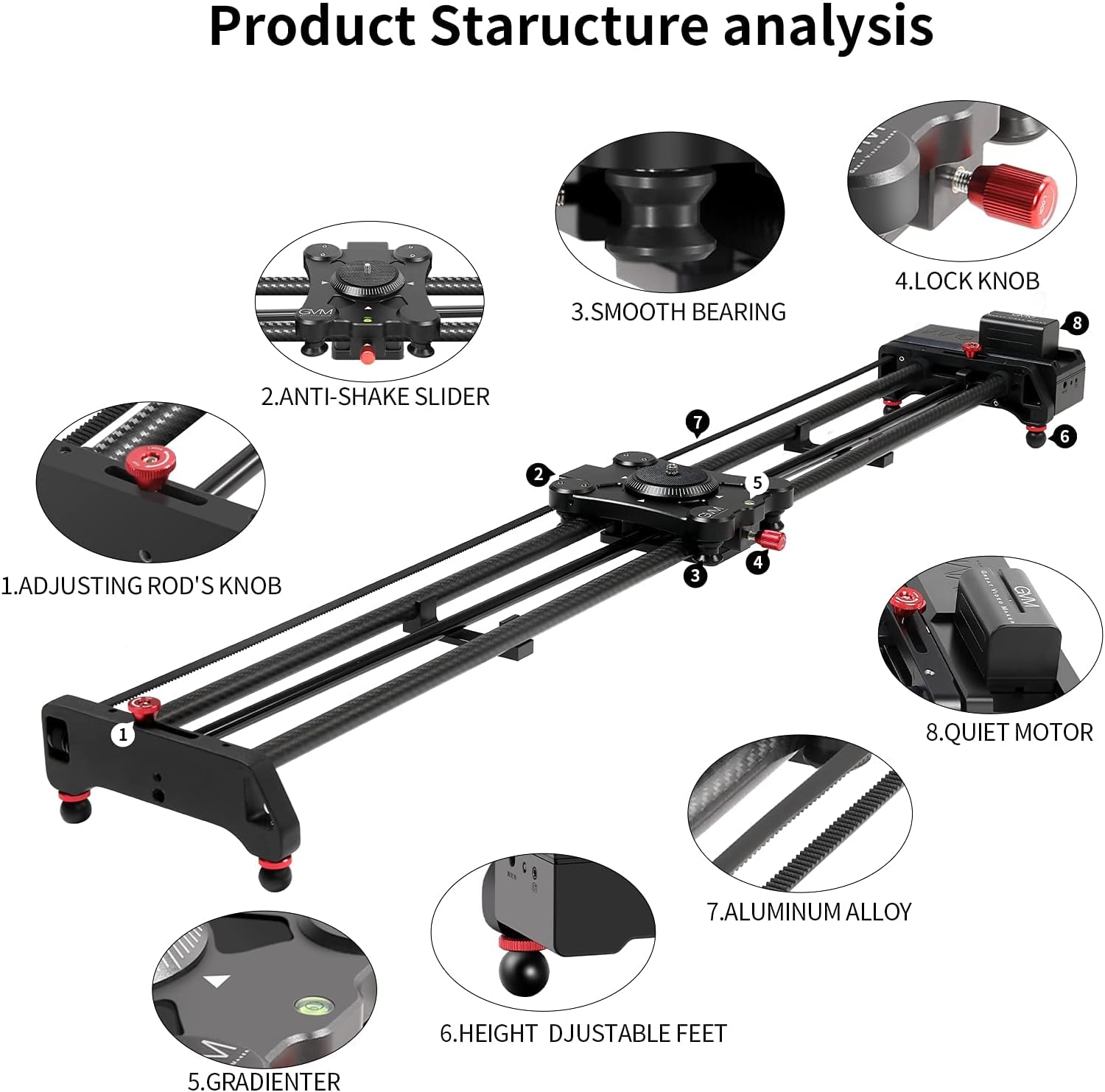
A motorized camera slider is exactly what it sounds like: a track-and-carriage system — think of a miniature version of a film dolly — where a small electric motor drives your camera smoothly from one end of the track to the other. Unlike a manual slider, which requires you to push the carriage by hand (nearly impossible to do evenly while also operating a camera alone), a motorized system handles the movement so you can focus on exposure, framing, and sound. For solo creators, that automation isn’t a luxury; it’s the difference between footage that looks produced and footage that looks like someone pushed the camera sideways with their elbow. This guide covers what you actually encounter when you deploy one — which app behaviors will slow you down, which accessories you cannot skip, and what the real failure points are — so you can make a clean purchasing decision before anything ships.
After that on-ramp, let’s go practitioner. You already know payload specs and NP-F batteries exist. What you may not have sorted out yet is where the marketing experience ends and the field experience begins. That gap is the article.
| EDITOR'S PICKGVM 48"/120cm Motorized Camera… | Mid-tierGVM Great Video Maker Camera Mo… | Budget pickNeewer Camera Slider Support Ar… | |
|---|---|---|---|
| Length | 48"/120cm | 48"/120cm | — |
| Material | Carbon Fiber | — | Aluminum Alloy |
| App Control | ✓ | — | — |
| Time Lapse | ✓ | ✓ | — |
| Panoramic Shot | ✓ | ✓ | — |
| Battery | — | ✓ | — |
| Price | $269.00 | $269.00 | $80.99 |
| See on Amazon → | See on Amazon → | See on Amazon → |
The Marketing Experience vs. the Field Experience
The footage quality jump from handheld or manual-slide to motorized is real and — per aggregated owner feedback across both the GVM and Neewer product lines — immediately noticeable even at the entry tier. No Film School’s overview of camera sliders consistently notes that smooth, repeatable motion is one of the highest-leverage production upgrades available below $500. That part of the pitch is accurate.
The gap shows up in the control layer.
Multiple GVM owners — documented in B&H Photo Video customer Q&A threads — describe the physical wireless remote that ships with the slider as the weakest component in the box. One owner’s framing, repeated across several reviews: the slider mechanics themselves are praised; the remote is described as essentially unreliable for precise speed changes and not suited to the kind of fine-tuned repeat-motion work you’d need for a solo interview setup. That’s a meaningful split. The motor is doing its job. The interface to that motor is the problem.
The Neewer DL400 earns consistent praise for smooth motion and straight-path repeatability — owners in long-run reviews note that the carriage tracking stays true even after many cycles, which matters for product shooting where you’re running the same motion repeatedly. But the same owners flag the app-only control architecture as a friction point for solo work. If you’re operating camera, audio, and slider simultaneously, needing to unlock your phone, open an app, and adjust a parameter mid-shot adds cognitive load at exactly the wrong moment. That’s not a dealbreaker; it’s a workflow constraint you need to plan around before you’re on set.
The pattern across both lines, per Premium Beat’s camera slider guide, is this: the mechanical quality at the $300–$600 price point has improved significantly over the last three years. The control and interface layer has not kept pace.
Battery Strategy: Three Is the Real Number
The NP-F battery system — the rectangular Sony-standard battery form factor used by most motorized sliders at this tier — is genuinely well-suited to field shooting. These batteries are cheap, widely available, and hot-swappable on most sliders without powering down. That’s good design.
The problem is runtime math. Owner reports across the GVM line consistently describe a single NP-F970 (the large-format version) lasting roughly 2–4 hours of active motor use depending on payload weight and ambient temperature. That’s fine for a morning shoot. It’s not fine for a full production day.
The recommendation that shows up repeatedly from experienced GVM owners: run three batteries in rotation. One in the slider, one on a USB charger in your bag, one as a cold spare. That rhythm means you’re never waiting for a charge and never surprised mid-take.
By the numbers:
- NP-F970 capacity: ~7,800 mAh (manufacturer-rated)
- Estimated active motor runtime per battery: 2–4 hours (owner-reported range)
- Three-battery rotation cost: typically $40–$80 additional at current market pricing
- Payoff: full-day coverage without downtime
If you’re sourcing batteries third-party — which most owners do — Cinema5D’s gear coverage notes that quality varies significantly between NP-F compatible cells. Stick to brands that publish actual mAh capacity measurements rather than inflated marketing specs, and test each battery before a paid shoot.
Stability Arms: Not Optional Past a Certain Payload
Here’s the purchase decision that catches people by surprise: the slider ships. You set it up across two tripods or on a single support. You load the camera. The carriage moves, and there’s a perceptible vibration in the footage that wasn’t in the sample videos.
That’s almost always a rigidity problem, not a motor problem.
Stability arms — lateral braces that run beneath the slider rail and connect to your tripod legs or a baseplate — exist to eliminate the flex in the rail system under load. Multiple Neewer owners, per B&H Photo customer feedback, describe the Neewer stability arms as effectively mandatory for setups combining the DL400 with a mirrorless body plus cage plus lens. One owner specifically describes the improvement as “immediate” when transitioning from unsupported to supported rail configuration with a heavier rig.
The practical rule, based on aggregated owner experience: if your total payload — camera body, lens, cage, plate, and any accessories mounted to the hot shoe — exceeds roughly 3 kg (6.6 lbs), treat stability arms as part of the initial purchase, not an optional upgrade. For payload under that threshold, you may get clean results without them, but the margin for error narrows on surfaces that aren’t perfectly level.
Studio Binder’s guide to camera movement in film makes a useful point here: the perceived smoothness of a slider move is disproportionately affected by micro-vibrations at the start and end of the carriage travel. That’s where unsupported rail systems lose rigidity fastest.
Surface Reality: The Prerequisite Nobody Puts in the Title
Motorized dolly car systems — the wheel-based variant that rolls directly on a surface rather than riding a dedicated rail — are honest about this in their documentation, but owners report that the practical implications don’t fully register until you’re on location.
The flat statement from multiple owners in aggregated reviews: smooth, hard, level surfaces are a prerequisite for clean results with a motorized dolly car. Tile, hardwood, sealed concrete — these work. Carpet, textured pavement, slightly warped flooring — these introduce wobble that the motor cannot compensate for and that stabilization in post cannot fully fix without cropping aggressively.
For rail-based sliders, the surface dependency shifts: your tripod footings and the levelness of your setup matter more than the floor itself. A GVM 48-inch carbon fiber slider owner notes in a widely-cited review that a single flathead tripod (one tripod supporting one end, the other end unsupported or on a sandbag) is viable — but only up to a payload threshold. Beyond that threshold — and owner estimates put it somewhere below 2 kg total payload — you’ll want sandbags or a second tripod. Without that support, the unsupported end of the rail flexes under carriage momentum, and that flex shows up as a subtle dip in the footage at the end of each travel direction.
The practical pre-location checklist this implies:
- Identify your shooting surface before you load in
- Bring a small bubble level for both the slider rail and each tripod head
- If you’re shooting on an unknown surface, budget 15–20 minutes for leveling and test passes before your subject or product is in frame
App Reliability: The Honest Assessment for Solo Interview Shoots
The GVM app — used for programming multi-axis moves, setting speed curves, and running timed loops — receives split feedback that tracks predictably with use case.
For product and b-roll shooting, where you’re setting a move, running several takes, then adjusting: owners generally describe the app as functional. You have time to navigate the interface between takes. Speed curve control is more precise than the physical remote. The programming features for looped motion work as advertised.
For solo interview-style shooting — where you’re also the subject, you’re running audio, and you need the slider to start and loop autonomously without touching your phone mid-take — the consensus is more cautious. Owners report intermittent Bluetooth connectivity drops, particularly at distances beyond 5–6 meters. The workaround most owners arrive at is setting the loop before rolling, moving away from the phone, and hoping the connection holds. That’s a reasonable field workaround, not a reliable system.
The honest decision frame per Cinema5D’s coverage of motorized systems at this tier: if the slider is running background movement while you’re on camera, set the loop before you hit record, stay within 4–5 meters of the controller device, and run a full dry cycle before each interview setup to confirm the connection is stable. Build that buffer into your call sheet. If a dropped connection mid-interview is unacceptable for your deliverable, a wired remote or a separate operator is the lower-risk option.
Frequently Asked Questions
Can a motorized slider work on a single tripod without support arms? Yes, under specific conditions. The GVM 48-inch carbon fiber model has owner documentation supporting single-tripod use — but only at payload weights below roughly 2 kg and with sandbags stabilizing the unsupported end. Above that threshold, rail flex introduces footage artifacts that compound with heavier payloads. Treat single-tripod operation as a light-duty configuration, not a default.
How important is the NP-F battery system for field shooting? Very. The NP-F form factor’s value is hot-swappability without downtime. The practical implication is that the battery system — plural batteries in rotation — matters as much as individual cell capacity. Owner consensus on full-day shoots settles on three batteries as the sustainable minimum. Budget for them upfront.
Is the GVM app reliable enough for solo interview-style shoots? Reliable enough with planning, not reliable enough to leave unmanaged. Set your loop and speed parameters before rolling, confirm the Bluetooth connection, stay within 4–5 meters of the controller device, and build test cycles into your setup time. Owners report that the app is more stable in that constrained use case than when actively adjusting parameters mid-shoot.
Why do motorized sliders need stability arms and when are they mandatory? Stability arms add rigidity to the rail system under load. Without them, carriage momentum — especially on longer rails — creates flex that shows up as micro-vibrations in footage. Based on aggregated owner experience, they become mandatory (rather than optional) when total payload exceeds approximately 3 kg. For lighter mirrorless setups without cages, you may not need them. For a caged mirrorless or any cinema camera configuration, build them into the initial order.
How much does surface type affect motorized slider performance? For dolly car systems: significantly. Clean, hard, level surfaces are a functional prerequisite — not a preference. For rail-based systems, surface type matters less than how level and stable your tripod footings are. Either way, bring a level and plan for setup time on unknown locations.
The Decision Frame
If you’re evaluating the GVM or Neewer slider lines for a solo production workflow, the real question isn’t whether the footage quality justifies the investment — owners across both lines consistently confirm that it does. The question is whether you’re budgeting for the complete system:
- If your payload is under 3 kg and your shoots are short: entry-level slider plus two NP-F970 batteries is a reasonable starting configuration.
- If your payload is over 3 kg or your days run long: add stability arms and a third battery to the initial order, not as upgrades after your first frustrating day.
- If you’re shooting solo interviews with yourself as subject: test your app loop setup thoroughly before any paid work, and have a wired remote backup in your kit.
- If you’re shooting on unknown surfaces: build 15–20 minutes of leveling and test passes into your call sheet, every time.
The GVM 48-inch carbon fiber slider and the Neewer DL400 are both reviewed extensively on B&H Photo Video with owner Q&A that tracks closely with the field realities described here — that’s a useful next research stop before committing to either system.