August 4, 2026 • Declan Merritt • 11 min reading time • Prices verified June 17, 2026
Camera Cage Systems for Sony A7-Series: SmallRig HawkLock, NEEWER, and CAMVATE Compared
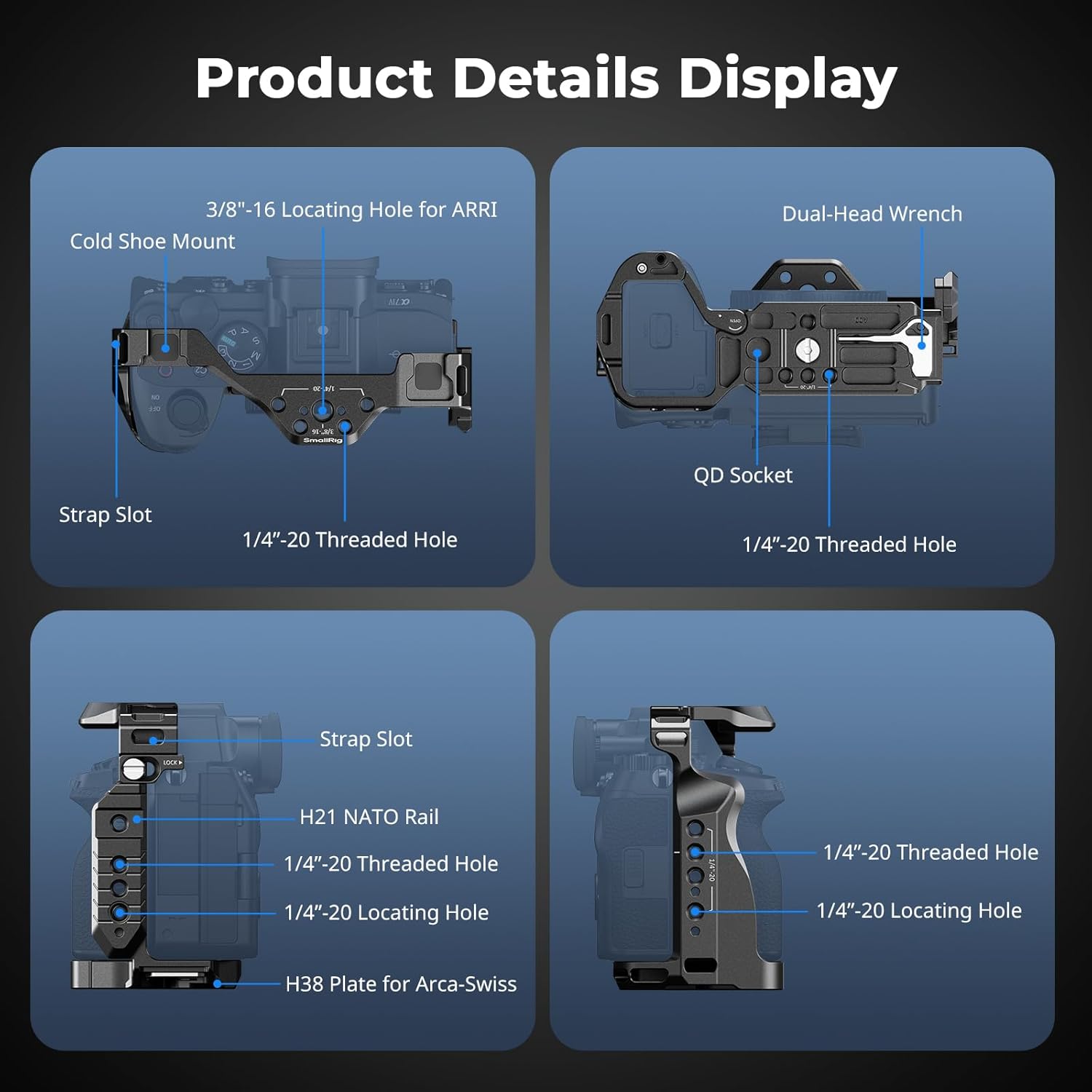
A camera cage is exactly what it sounds like: a metal frame — usually aluminum alloy or carbon-reinforced aluminum — that wraps around your camera body and gives you somewhere to attach everything else. Monitors, microphones, follow-focus motors, handles, matte boxes — all of it screws into the cage rather than fighting over the one cold shoe (a standardized mounting slot on top of the camera) your mirrorless body shipped with. For Sony A7-series shooters in particular, the cage question comes up fast: the A7 IV, A7R V, A7S III, and A1 are all small-bodied, highly capable cameras, but they weren’t designed for heavy accessory loads. Add a monitor arm and a microphone and you’ve already maxed out the factory mounting points. A cage solves that problem, and it does it once — if you pick the right one.
This comparison covers three mid-market options that consistently surface at the $40–$120 price point: the SmallRig HawkLock system (body-specific, Arca-integrated), the NEEWER cage (mount-point-dense, universal-adjacent), and the CAMVATE universal cage (genuinely body-agnostic, budget-entry). If you’re in the middle of a purchasing decision on a Sony A7-series build, here’s how to read the tradeoffs.
| EDITOR'S PICKSmallRig Black Mamba Camera Cag… | Mid-tierNEEWER Aluminum Alloy Camera Ca… | Budget pickCAMVATE Basic Camera Cage Rig w… | |
|---|---|---|---|
| Camera fit | Canon EOS R5 Mark II | Sony A7S III/A7IV/A6600 | Universal |
| Material | Aluminum alloy | Aluminum alloy | — |
| Threaded mounts | 1/4''-20 & 3/8''-16 | — | — |
| Cold shoe type | HawkLock | — | — |
| Base mount | — | Arca type | — |
| Price | $169.98 | $77.99 | $39.00 |
| See on Amazon → | See on Amazon → | See on Amazon → |
What Separates a Good Cage from a Great One
Before comparing specific products, it helps to understand what the specs actually mean in practice. Body-specific fit, Arca-Swiss dovetail integration, ARRI locating pins, and mount-point density are all real differentiators — but they matter differently depending on how you shoot.
A body-specific cage is machined to match one camera model’s exact dimensions, port positions, and thread locations. According to No Film School’s Camera Cage Buying Guide, this machined precision is what separates a cage that behaves like a permanent part of your rig from one that introduces micro-slop over time. That slop may be invisible in a still photo but becomes noticeable in stabilized video footage, especially on shoulder rigs where any play in the cage-to-body junction telegraphs through the support system.
An Arca-Swiss dovetail plate is a standardized rail profile accepted by most quality tripod heads and many quick-release systems. Having it built into a cage eliminates one separate accessory purchase and, more importantly, one workflow friction point: you can move from handheld to tripod without swapping plates mid-shoot.
ARRI locating pins are standardized physical alignment pins used in cinema rigs to prevent rotation under load. Their presence on a mid-market cage signals that the machining tolerances are tight enough to be worth registering against — a meaningful indicator of overall build quality.
Mount-point density — the number of 1/4”-20 thread holes, cold shoes, and NATO rails available on the cage frame — determines how many accessories you can attach simultaneously without adapters or stacking solutions.
With those definitions in place, here’s how the three products compare.
SmallRig HawkLock: Precision Fit for Committed Sony Shooters
Who It’s For
SmallRig’s HawkLock line is built on a body-specific design philosophy: each cage is machined to match the exact dimensions of a particular camera model. For Sony A7-series bodies — A7R V, A7 IV, A7S III, and A1 — separate HawkLock SKUs exist for each body, and that distinction matters more than the marketing category implies. Verified buyer reviews aggregated at B&H Photo consistently describe fit as precise, with build quality rated as exceptional for the price class.
The headline practical feature is the built-in Arca-Swiss dovetail plate. Verified buyers at B&H Photo specifically identify this as a meaningful workflow improvement: going from handheld to tripod without a separate plate swap saves real time on any shoot where you’re moving between positions. Several reviewers describe it as the single feature that justified the price difference over lower-cost alternatives.
Select HawkLock variants also include ARRI locating pins, which puts this cage in the conversation with support rigs that cost considerably more. According to No Film School’s Camera Cage Buying Guide, this level of machined precision is the defining characteristic of cages that remain stable under accessory load over time, rather than developing play at the camera-to-cage junction.
The Compatibility Warning You Cannot Skip
Multiple verified buyers at B&H Photo flag a genuine purchase-mistake pattern with SmallRig’s body-specific cages: a cage listed for one generation of a camera body will not fit the next generation, even when the cameras look nearly identical. Port positions and body geometry differ enough between generations that a mismatched cage can physically obstruct card doors and battery access. At least two verified buyers in aggregated B&H Photo review data flag the memory card door being blocked as a direct consequence of a wrong-generation cage purchase.
This is not a SmallRig-specific flaw — it is an inherent characteristic of body-specific cage design. But it means the research burden before purchase is real: verify the exact cage SKU against your exact Sony body model, not just the “A7-series” product family label.
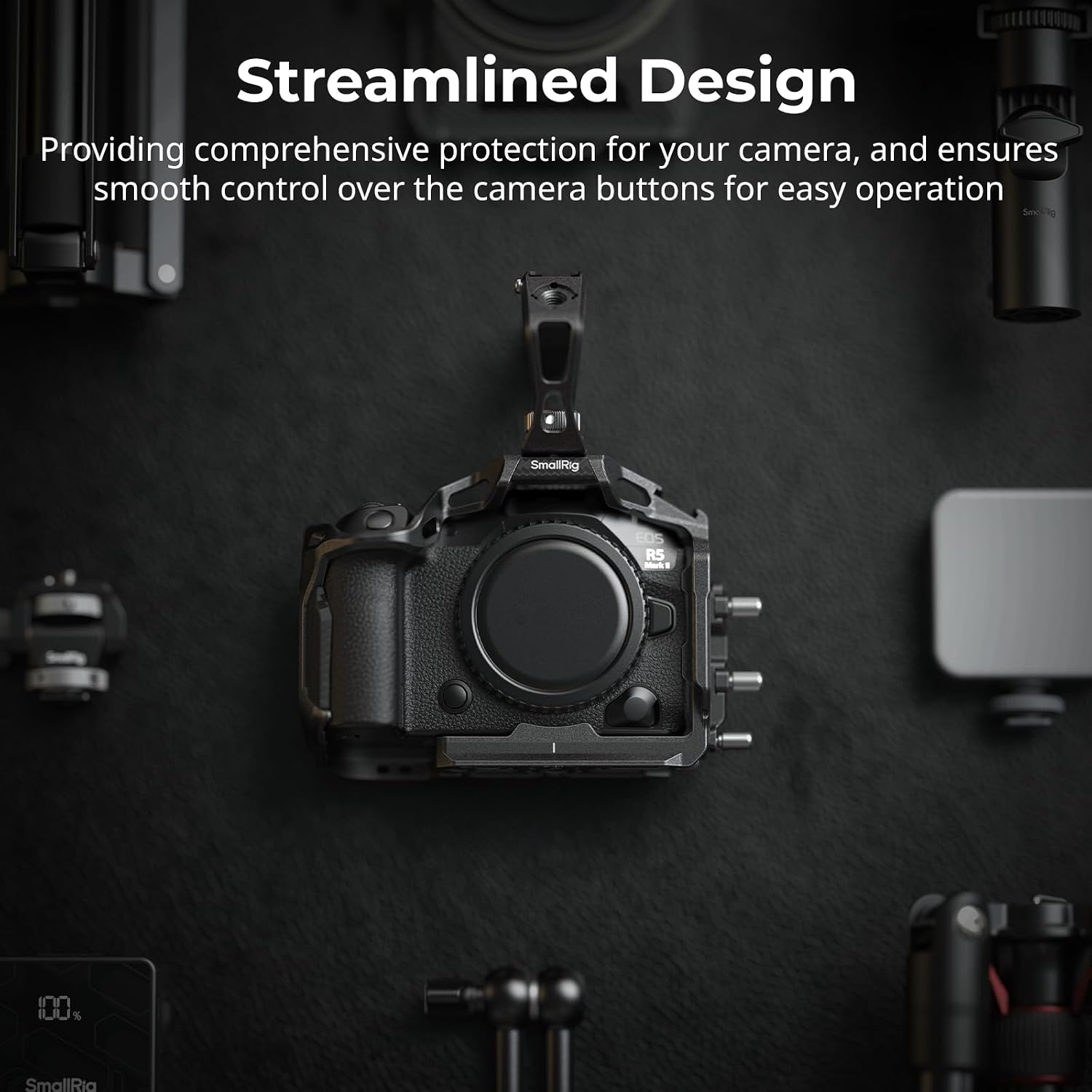
SmallRig
$169.98
In stock on Amazon
Check price on AmazonNEEWER: Mount-Point Density as a Design Priority
Who It’s For
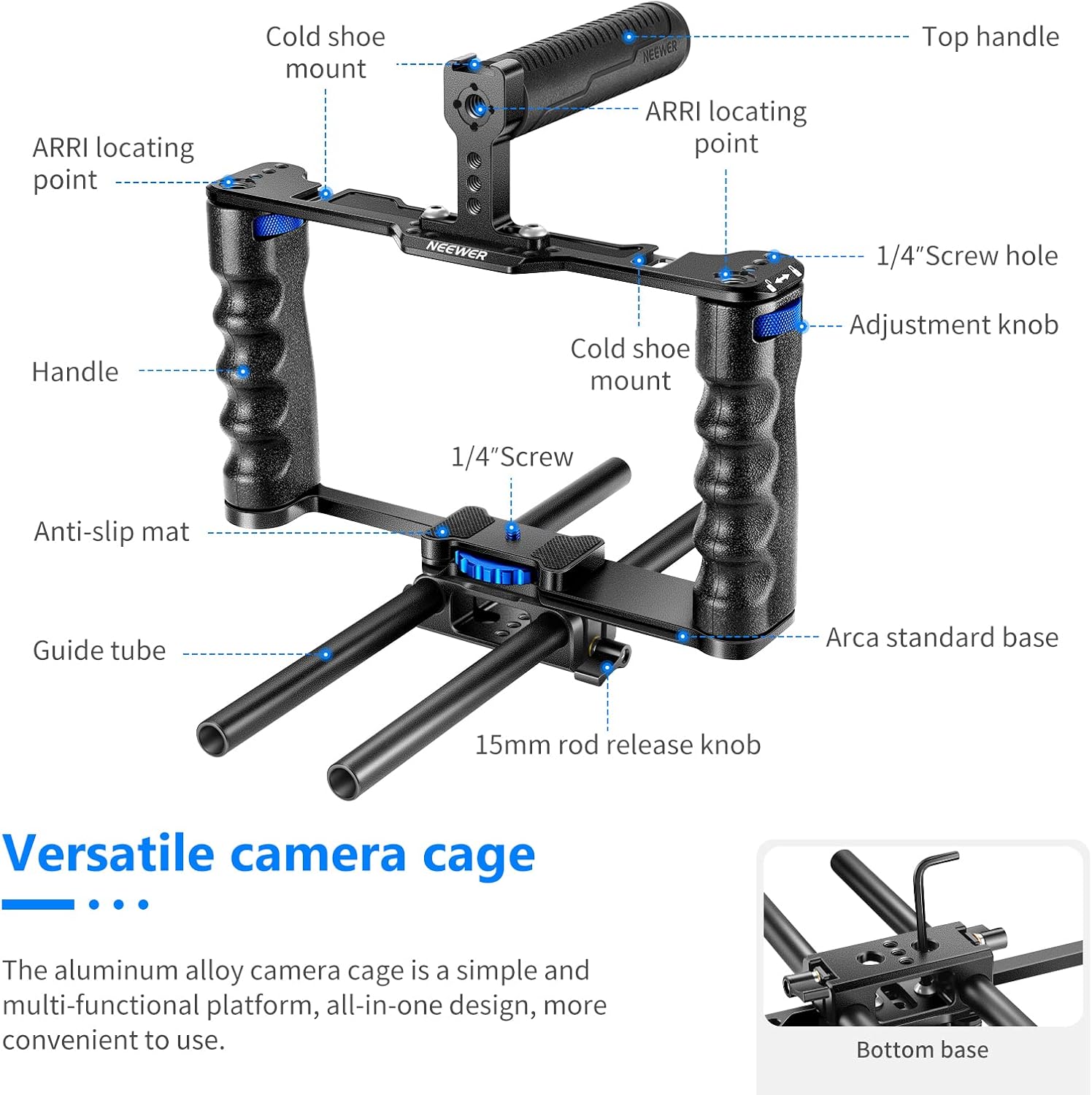
The NEEWER cage for Sony A7-series bodies sits at a lower price point than the HawkLock and operates on a different design philosophy: rather than precision body-fit as the headline feature, NEEWER prioritizes the number of available mounting points. Verified buyer reviews aggregated at B&H Photo consistently describe it as delivering exactly what it advertises — which in this context is a genuine compliment. For run-and-gun shooters who need to attach a microphone, a small monitor, and a top handle simultaneously, the density of 1/4”-20 thread holes and cold shoes is the feature that matters most.
The tradeoff, documented across multiple B&H Photo verified buyer reviews, is fit tolerance. The NEEWER cage’s fit, while functional, doesn’t have the snug machined feel of a body-specific cage. Cinema5D’s editorial coverage of mirrorless camera cage performance notes that this is the point at which universal-adjacent cages begin to show their limits: they function reliably as anchors for lightweight accessory stacks, but become less predictable under lateral load — the kind introduced by a heavier monitor arm or a shoulder rig with a follow-focus attached.
For vloggers and hybrid shooters who swap accessories frequently and aren’t assembling a locked-down cinema package, NEEWER’s mount-point density and lower cost-of-entry represent a rational tradeoff. The cage delivers on its specification honestly, and for a one-monitor, one-microphone accessory stack, that specification is more than sufficient.
NEEWER
$77.99
In stock on Amazon
Check price on AmazonCAMVATE Universal: The Multi-Body Flexibility Case
Who It’s For
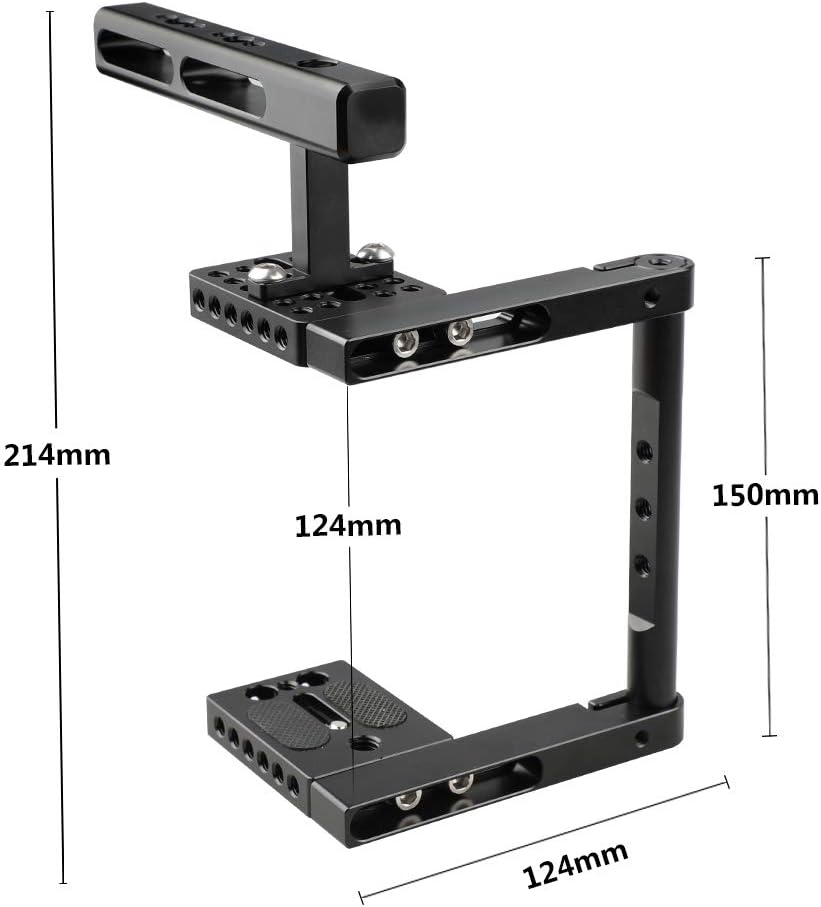
CAMVATE’s universal cage is genuinely body-agnostic — designed to accept a range of camera sizes rather than being machined to a specific body. The value proposition is direct: if you own multiple camera bodies, or if you expect to upgrade your Sony body within the next 18 to 24 months, a universal cage amortizes its cost across more gear than a body-specific option can. Verified buyer reviews at B&H Photo include several accounts from shooters who describe the cage as solving their single-cold-shoe problem in a way they didn’t anticipate before purchase — meaning the accessory-mounting utility was more immediately practical than they expected.
The Honest Tradeoffs
Universal fit produces predictable gaps. Because the CAMVATE cage is not machined to the A7R V’s or A7 IV’s specific geometry, port access can be imprecise. Battery doors and card slots may require the cage to be loosened or partially removed depending on which Sony body is mounted, according to the pattern documented in verified buyer reviews at B&H Photo. That is a real workflow friction point on any shoot where battery swaps happen under time pressure.
DPReview’s Sony A7R V and A7 IV body dimension and specification data makes clear how differently sized even closely related A7-series bodies are — a detail that explains why a single universal frame cannot simultaneously optimize port access across the full Sony A7 lineup.
The CAMVATE universal cage is the better choice as a secondary cage or a flexibility hedge than as a primary production rig anchor. If your shooting is occasional, your body upgrade timeline is short, or you need one cage to serve multiple bodies, CAMVATE’s tradeoffs are rational. If your A7-series body is your primary production platform and port access speed matters, the looser tolerances will surface as friction sooner than they do in lighter-use scenarios.
CAMVATE
$39.00
In stock on Amazon
Check price on AmazonBy the Numbers: Quick Comparison
| Feature | SmallRig HawkLock | NEEWER | CAMVATE Universal |
|---|---|---|---|
| Body-specific fit | Yes (per model) | Partial | No |
| Built-in Arca-Swiss plate | Yes (select models) | No | No |
| Mount-point density | Moderate | High | Moderate |
| Price tier (approx. 2026) | $80–$120 | $40–$70 | $35–$65 |
| ARRI locating pin | Select variants | No | No |
| Port access reliability | High (body-matched) | Moderate | Variable |
Making the Decision: If X, Then Y
If you’re building a deliberate production rig — shoulder rig, follow-focus, external monitor, matte box — and your Sony body is your primary shooting platform for the next two or more years, the SmallRig HawkLock is the correct anchor. The built-in Arca plate eliminates one accessory purchase and one workflow friction point. Verify your exact body model against the exact cage SKU before ordering; the body-specific design is the feature, and a generation mismatch negates it entirely.
If you’re running a leaner run-and-gun kit — microphone, small monitor, maybe a top handle — and you want mounting flexibility without paying for precision you won’t use, the NEEWER cage delivers on its specification honestly. The mount-point density is its real feature, and for a one-monitor, one-mic accessory stack, it performs reliably at its price point.
If you own multiple bodies or expect to upgrade within 18 months, the CAMVATE universal cage is the rational hedge. You’ll accept looser port access as the cost of flexibility. It functions better as a secondary cage than as a primary production rig anchor.
If your only hesitation is the occasional video shoot: the cage is still worth it. The time saved by not rebuilding your accessory stack from scratch on every shoot — and the physical protection a metal cage provides against drops — pays back quickly even on low-frequency production schedules. As Cinema5D’s mirrorless cage coverage notes, a cage fundamentally changes the ergonomic and durability profile of a mirrorless body used in video production.
Frequently Asked Questions
Will a SmallRig cage listed for the A7 IV fit the A7R V? No. SmallRig’s body-specific cages are machined to exact model dimensions. The A7 IV and A7R V have different physical profiles; port positions and body geometry differ enough that a mismatched cage can obstruct battery doors and card slots. Always match the cage SKU to your exact Sony body model, not just the A7-series product family.
Does adding a cage make handheld stills harder or block the battery and card door? A well-fitted body-specific cage — like the SmallRig HawkLock — is designed with door cutouts aligned to your specific body’s battery and card slots. Handheld feel changes slightly due to added weight, but most operators adapt quickly. The risk of blocked doors is primarily a universal or wrong-generation cage problem. If port access matters to your workflow, body-specific design is the more reliable choice.
Does the SmallRig HawkLock work with Arca-Swiss heads without an additional plate? The built-in Arca-Swiss dovetail on select HawkLock models is designed to be compatible with Arca-Swiss standard clamps, which includes most quality fluid heads and many quick-release systems. Verified buyers at B&H Photo consistently confirm this compatibility in aggregated review data. Verify that your specific tripod head or clamp accepts the Arca-Swiss profile before assuming a direct fit.
What’s the difference between a universal cage and a dedicated cage? A dedicated cage is machined to match one camera body’s exact dimensions, port positions, and thread locations. A universal cage uses adjustable rails or a wider frame to accommodate a range of body sizes. Dedicated cages offer tighter tolerances, better port access, and more precise accessory alignment. Universal cages offer flexibility across multiple bodies at lower cost, with looser fit as the tradeoff.
How many cold shoes and NATO rails do I realistically need for a standard run-and-gun setup? For a monitor, microphone, and wireless transmitter — a typical three-accessory run-and-gun stack — you need a minimum of two cold shoes and one NATO rail. NATO rails accept sliding quick-release handles and some monitor arms. Most mid-tier cages provide this. If you’re adding a follow-focus and matte box, one additional NATO rail and two more 1/4”-20 thread points become relevant.
Is a camera cage worth buying if I only shoot video occasionally? For occasional video, the protection and accessory-mounting value still holds. The more relevant question is whether a body-specific cage makes sense if you’re likely to upgrade bodies soon. For Sony A7-series bodies specifically, the small factory footprint means even one monitor and one microphone will quickly exhaust native mounting options — the cage pays back sooner than most shooters expect.
The next step is matching your exact Sony body to the right SmallRig HawkLock SKU — or deciding whether the NEEWER or CAMVATE better fits your accessory stack and upgrade timeline. Use the comparison table above as your decision filter: if built-in Arca and precision fit matter, HawkLock. If mount density and budget matter, NEEWER. If multi-body flexibility matters, CAMVATE.