August 13, 2026 • Declan Merritt • 10 min reading time • Prices verified June 17, 2026
Tripod Dolly Buyer's Guide: Lock Mechanisms, Wheel Size, and What Rolls Where
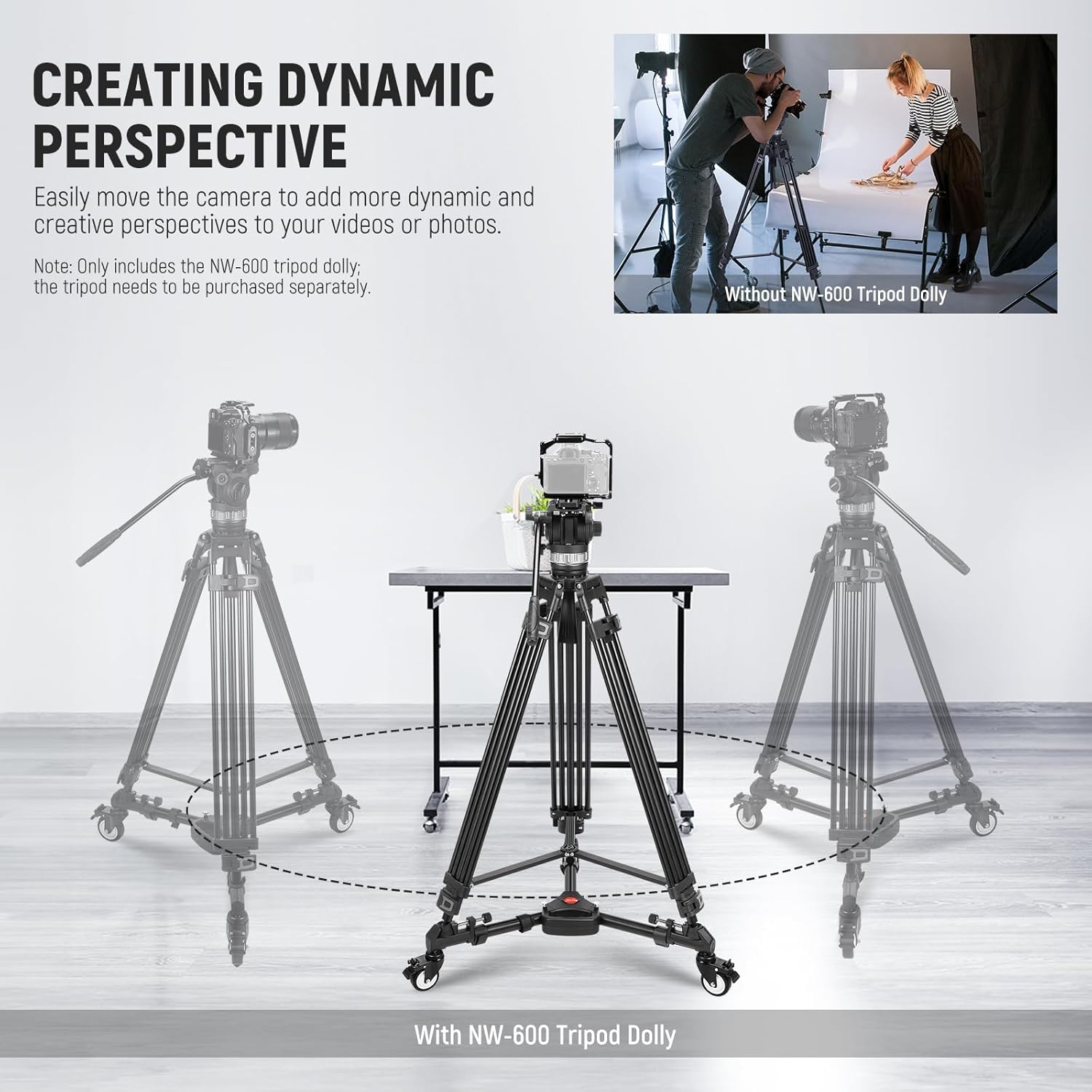
A tripod dolly is exactly what it sounds like: a wheeled platform that sits underneath your tripod’s feet, letting you roll the entire camera-and-tripod assembly across a floor instead of picking it up and repositioning it. For static interviews or locked-off wide shots, you don’t need one. But the moment a director asks for a slow push-in, a lateral reveal, or a quick reframe between setups, a dolly turns a two-person lift into a one-hand roll. They’re common on commercial sets, event floors, studio builds, and anywhere a full track-and-dolly kit would be overkill. The catch — and the reason this guide exists — is that the differences between a $60 dolly and a $150 one aren’t always visible in the product photo. Wheel size, brake design, and leg-spread compatibility determine whether your shot is buttery smooth or whether you spend the afternoon fighting the rig.
If you’re reading this with a specific dolly already in your cart, or a rental house inquiry sitting in your inbox, this guide will help you make the call faster. We’ll cover what the specs and owner reports actually say about the four most-purchased dollies in this category — SmallRig, Cayer TD03, Neewer, and the Vidpro Skater — and we’ll name the tradeoffs directly.
| EDITOR'S PICKCayer TD03 Tripod Dolly | Mid-tierPhotography Tripod Dolly | Budget pickNEEWER Photography Tripod Dolly | |
|---|---|---|---|
| Weight limit | 66 lbs | — | 50 lbs |
| Case included | ✓ | — | — |
| Adjustable legs | — | ✓ | — |
| Wheel type | — | Rubber | Rubber |
| Price | $59.99 | $59.99 | $42.95 |
| See on Amazon → | See on Amazon → | See on Amazon → |
What Actually Determines Roll Quality: Wheel Size and Floor Type
The single most consistent praise across all four dollies reviewed here is for large 3-inch rubber wheels. Owners consistently report that 3-inch rubber rolls smoothly on hard floors, low-pile carpet, and concrete without introducing vibration into the shot. This matters more than most buyers anticipate. A 2-inch or smaller hard-plastic wheel will transmit every floor imperfection directly up through the tripod legs and into your image — especially visible in longer focal lengths where micro-vibration is amplified. B&H Photo Video’s tripod dolly category listings note that wheel diameter and material are the primary differentiators across the sub-$200 segment, and the pattern in owner feedback supports that framing.
Here’s the practical floor-by-floor breakdown based on aggregated owner reports:
- Hardwood studio floors: All four dollies with 3-inch rubber wheels perform well. No reported marking or scuffing on finished floors from any of the four units reviewed here.
- Low-pile carpet: Large rubber wheels handle this surface, though operators report slightly more resistance. Owners of the SmallRig and Cayer TD03 specifically call out carpet as workable.
- Concrete: Manageable, but owners on both rough and polished concrete note that any floor debris gets caught by the wheels and creates micro-bumps. Sweep before you roll.
- High-pile carpet or rugs: None of these dollies are designed for this surface. Tracking shots on thick carpet require a proper track kit.
The Vidpro Skater dolly is the outlier in roll performance — not because of wheel quality, but because of its handle length. Owners across multiple review sources describe the handle as too short for comfortable maneuvering, which becomes a real problem on any shot requiring a smooth turn or directional change. For straight push-pull moves it’s adequate; for anything with arc or lateral tracking, owners consistently flag it as the weakest of the four. Studio Binder’s guide to dolly shots notes that operator comfort and grip position directly affect shot steadiness — the Vidpro’s handle geometry works against that.
Lock Mechanisms: The Feature You’ll Use Every Single Setup
The wheel lock is how you convert your dolly from a rolling platform into a stationary base for a static shot. On a fast-paced shoot — corporate interviews, event coverage, run-and-gun documentary — you’re locking and unlocking those wheels dozens of times per day. This is where the four dollies diverge most meaningfully.
Cayer TD03: Owners describe the brakes as simple and reliable. The mechanism engages with consistent force and releases without fighting you. For operators who prioritize speed on multi-setup days, this is the most consistently praised lock system in the group.
SmallRig Quick-Lock system: The Quick-Lock design earns praise for its installation speed — the tripod seats and locks into the dolly faster than traditional spread-and-clamp systems. However, at least one owner specifically reports that the wheel lock itself is “too hard to unlock” during fast-paced shoots, requiring more force than expected during the release. That’s worth weighing if your workflow involves frequent lock/unlock cycles under time pressure. The tradeoff is real: you gain a faster tripod-seating system, but you may pay for it at the wheel brake.
Neewer: Lock mechanism reports are generally positive, but Neewer’s bigger issue — covered in depth below — is a payload discrepancy that affects how you should think about this dolly overall.
Vidpro Skater: The lock mechanism itself doesn’t draw specific complaints. The handle issue is the dominant feedback theme, not the brake.
The decision rule: If your shoot involves rapid static-to-move transitions, the Cayer TD03’s brake simplicity is its strongest argument. If you’re setting up fewer times but want faster tripod installation, the SmallRig Quick-Lock’s speed advantage is real — just budget extra reach when it’s time to release the wheel.
Payload Reality Check: The Neewer Numbers Problem
This is the most important reliability flag in this category, and it’s specific to the Neewer dolly.
Owners and reviewers have surfaced a direct contradiction between the Neewer dolly’s listed 50 lb capacity and the product’s own literature and promotional photos, which state 33 lbs. That’s not a rounding difference — it’s a 34% gap that matters when you’re planning what to put on top.
By the numbers:
| Claimed spec (product listing) | Spec per product literature / promo photos |
|---|---|
| 50 lbs | 33 lbs |
If you’re running a mirrorless body with a prime lens on a lightweight tripod, either number clears your payload comfortably. But if you’re mounting a heavier mirrorless or DSLR system in a cage, or a video head that itself weighs 3–5 lbs, the conservative number is the one to plan against. No Film School’s overview of camera support budgeting consistently advises building payload calculations from the lowest published spec when specs conflict — that’s the right call here. Use 33 lbs as your working ceiling until Neewer resolves the discrepancy in their documentation.
For lighting stands with a strobe mounted on top, the same principle applies: calculate the total system weight (stand + head + strobe + cable) against the 33 lb figure, not 50. Most lightweight speedlight-and-stand setups will clear it. A heavier monolight or a stand with a large softbox bracket may push you over.
Tripod Compatibility: Leg Spread, Foot Type, and the Specialty Tripod Problem
Every dolly in this category is designed to accept a standard range of tripod leg spreads. The SmallRig Quick-Lock system earns specific praise for accommodating most standard tripods quickly — but at least one owner notes it is incompatible with very large specialty tripods, specifically citing Celestron telescope legs as an example where the leg diameter or spread exceeds what the dolly’s receiver can accommodate.
For Manfrotto tripods: the most common Manfrotto video and photo tripods — including the 055 series and MT190 family — fall within the standard leg-spread range that all four dollies are designed to handle. Owners using Manfrotto legs on SmallRig and Cayer TD03 dollies report no fit issues. That said, “will it fit” always comes down to specific leg dimensions, so measure your tripod’s minimum leg spread at the feet before purchasing.
The practical compatibility checklist:
- Measure your tripod’s minimum leg spread (the distance between feet at their narrowest useful angle). Most dollies accept spreads from roughly 18 to 36 inches.
- Check foot type. Rubber feet seat cleanly in dolly cups. Spiked feet will require rubber tip caps, which most tripods include.
- Specialty or oversized legs — telescope mounts, heavy-duty studio stands — are the exception, not the rule. If your legs are non-standard, verify against the dolly’s cup diameter spec before ordering.
B&H Photo Video’s listing specs for tripod dollies in this category consistently include minimum and maximum leg spread figures; cross-reference your tripod’s spread against those numbers before committing.
Floor Marking: Do Rubber Wheels Leave Marks on Hardwood?
Across aggregated owner reports for all four dollies covered here, no owners report rubber wheel marks on hardwood or finished studio floors under normal rolling conditions. This is consistent with how 3-inch rubber wheels behave generally: the soft compound conforms to the surface rather than dragging across it, which is also why they handle carpet without excessive resistance.
The caveat is floor condition and wheel cleanliness. Rolling a dolly across a gritty surface before bringing it onto a finished floor can transfer debris that scratches the finish — that’s a floor-prep issue, not a wheel-material issue. Standard practice on studio floors is a quick wheel wipe before the dolly comes into a finished space.
PremiumBeat’s guide to camera movement notes that rubber-wheeled dollies are specifically preferred in studio environments over hard-plastic-wheeled alternatives for exactly this reason: softer compound, less floor contact noise, and no surface marking under normal use.
Frequently Asked Questions
What is the actual weight capacity of the Neewer tripod dolly — 33 lbs or 50 lbs? The product listing states 50 lbs, but the product’s own literature and promotional photos indicate 33 lbs. Until Neewer corrects the discrepancy, plan your payload against 33 lbs. It’s the conservative and documented figure.
Will any of these dollies fit a Manfrotto or Celestron tripod? Standard Manfrotto video and photo tripods fit all four dollies without reported issues. Celestron telescope legs are specifically noted by at least one SmallRig owner as too large for the Quick-Lock receiver. Specialty or oversized tripods should be measured against the dolly’s stated leg-spread range before purchase.
How do you lock the wheels during a static shot, and how fast can you unlock them? Each wheel has an individual brake lever or pedal. You engage all three to lock the platform for a static shot. Unlock speed varies by model — Cayer TD03 owners describe their brakes as fast and reliable; at least one SmallRig owner specifically flags the wheel lock as harder than expected to release quickly under pressure.
Do the 3-inch rubber wheels leave marks on hardwood studio floors? No marks are reported by owners across any of the four dollies covered here, under normal rolling conditions. Keep the wheels clean and free of floor debris before rolling onto finished surfaces.
Can these dollies handle a full lighting stand with a strobe mounted on top? A lightweight speedlight-and-stand setup will typically fall within the 33 lb working ceiling. A heavier monolight, large softbox, or heavy-duty stand may approach or exceed it. Calculate total system weight — stand plus head plus fixture plus cable — against the conservative payload figure before loading up.
The Decision Frame: If X, Then Y
You’ve read the tradeoffs. Here’s the direct version:
- If fast brake release matters more than fast tripod installation: The Cayer TD03 is the straightforward call. Simple, reliable, no reported release issues.
- If you want the fastest tripod seating and can tolerate a stiffer wheel brake: The SmallRig Quick-Lock earns its reputation for installation speed — just know the wheel lock requires more deliberate effort to release.
- If you’re buying Neewer: Use 33 lbs as your payload ceiling regardless of what the listing says. Verify before every setup whether your total system weight clears that number.
- If tracking shots with turns or arcs are on your shot list: Skip the Vidpro Skater. The handle geometry works against you on anything that isn’t a straight push-pull.
- If you have a specialty tripod with oversized legs: Measure your leg spread and foot diameter before ordering any dolly, and verify the SmallRig Quick-Lock’s receiver dimensions specifically if your legs are on the larger end.
For most commercial and event operators working with standard mirrorless or DSLR rigs on Manfrotto or comparable legs, the Cayer TD03 and SmallRig represent the clearest value — different enough in their lock philosophy to suit different workflows, similar enough in roll quality that floor performance won’t be the deciding factor.