May 8, 2026 • Declan Merritt • 12 min reading time • Prices verified June 17, 2026
Video Tripod Fluid Heads Compared: K&F Concept, SIRUI, and SmallRig at the $100–$300 Mark
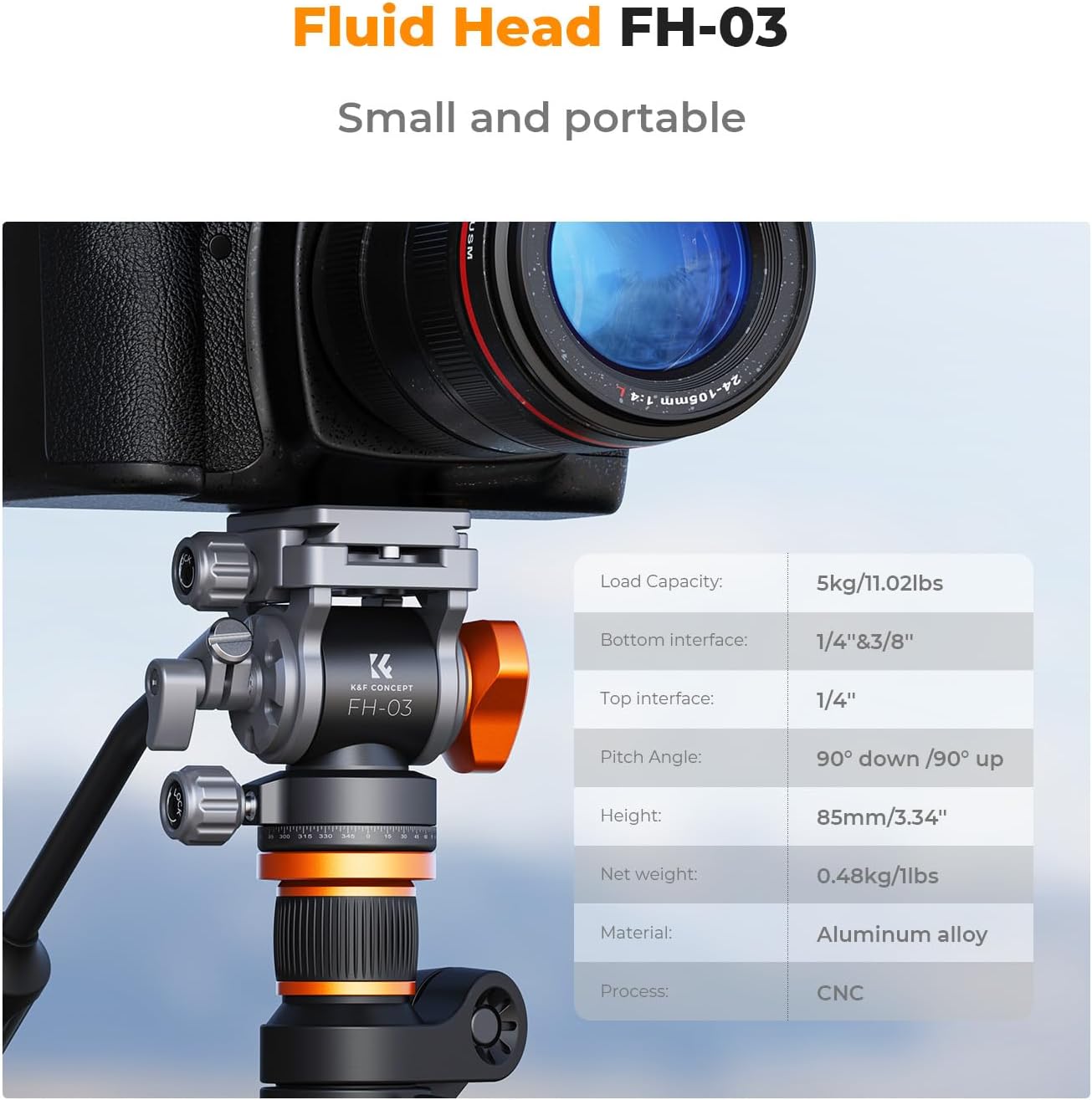
If you’ve been shooting video on a DSLR or mirrorless camera — a Sony ZV-E10, a Fujifilm X-S20, a Canon R8 — you’ve probably felt the difference between a cheap tripod ball head and a proper fluid head. A fluid head is the mechanism that sits on top of the tripod legs and lets you pan (rotate left and right) and tilt (angle up and down) the camera in smooth, controlled arcs rather than jerky, stiff lurches. The “fluid” part refers to a hydraulic drag system — viscous oil or grease inside the mechanism creates resistance that you adjust to match your payload and shooting style. Get that drag dialed in, and a slow pan across a landscape feels cinematic. Get it wrong — or buy a head that can’t properly dial it — and every move looks like you’re fighting the camera. This article compares the leading heads in the $100–$300 range from K&F Concept, SIRUI, and SmallRig, using aggregated owner feedback and published specifications to show you where the money actually goes.
| EDITOR'S PICKSIRUI SQ75+VHS10 Carbon Fiber T… | Mid-tier[SIRUI AM-25S Video Tripod](https://www.amazon.com/dp/B07KD3T9BP?tag=greenflower20-20) | Budget pick[SmallRig AD-01 Video Tripod](https://www.amazon.com/dp/B09X2X2BKC?tag=greenflower20-20) | |
|---|---|---|---|
| Max Height | 71.7" | 74.8" | 73" |
| Counterbalance | 7-step | — | — |
| Damping Adjust | 4-step | Adjustable | — |
| Price | $479.00 | $149.00 | $127.99 |
| See on Amazon → | See on Amazon → | See on Amazon → |
The $100–$300 Bracket: What You’re Actually Buying
Before the individual models, it’s worth framing what this price tier can and cannot do. You are not buying ARRI-level fluid cartridges here. What you are buying is a head that, in the hands of a skilled operator with a properly matched payload, can produce broadcast-usable moves. The catch word is “matched.” Every experienced operator who reviews heads in this range lands on the same point: counterbalance — the mechanism that offsets the camera’s tendency to tip forward — is the deciding variable. A head with inadequate or non-adjustable counterbalance will fight you on every tilt, and no amount of drag adjustment fixes a fundamental imbalance between your rig’s center of gravity and the head’s resistance curve.
No Film School’s tripod buyer guidance and PremiumBeat’s buyer’s guide “Best Video Tripods for Every Budget” both consistently flag this as the primary failure mode for operators upgrading from a sub-$100 pan-and-tilt to their first real fluid head: they underestimate payload — camera body weight plus lens, cage, follow-focus unit, matte box, monitor — and they buy a head rated for what their body weighs naked, not dressed.
Typical payload stack for a mid-tier mirrorless rig, based on manufacturer specifications compiled at B&H Photo Video:
| Component | Approximate Weight |
|---|---|
| Sony FX30 body | 0.56 kg |
| Fast prime or zoom lens | 0.4–0.9 kg |
| SmallRig cage and rods | 0.3–0.5 kg |
| Follow-focus and matte box | 0.3–0.6 kg |
| Monitor (5–7 inch) | 0.3–0.5 kg |
| Total dressed | 1.86–3.06 kg |
That’s before a V-mount battery or a wireless transmitter. Many operators new to the $200-range head category are surprised to find their “lightweight mirrorless” rig sits at or above the head’s rated optimum payload when properly equipped for a professional shoot. DPReview’s mirrorless body specification pages confirm that even compact bodies like the Sony FX30 add up quickly once a production-ready accessory stack is mounted.
K&F Concept, SIRUI, and SmallRig Side by Side
K&F Concept Fluid Heads: The Value-Ceiling Question
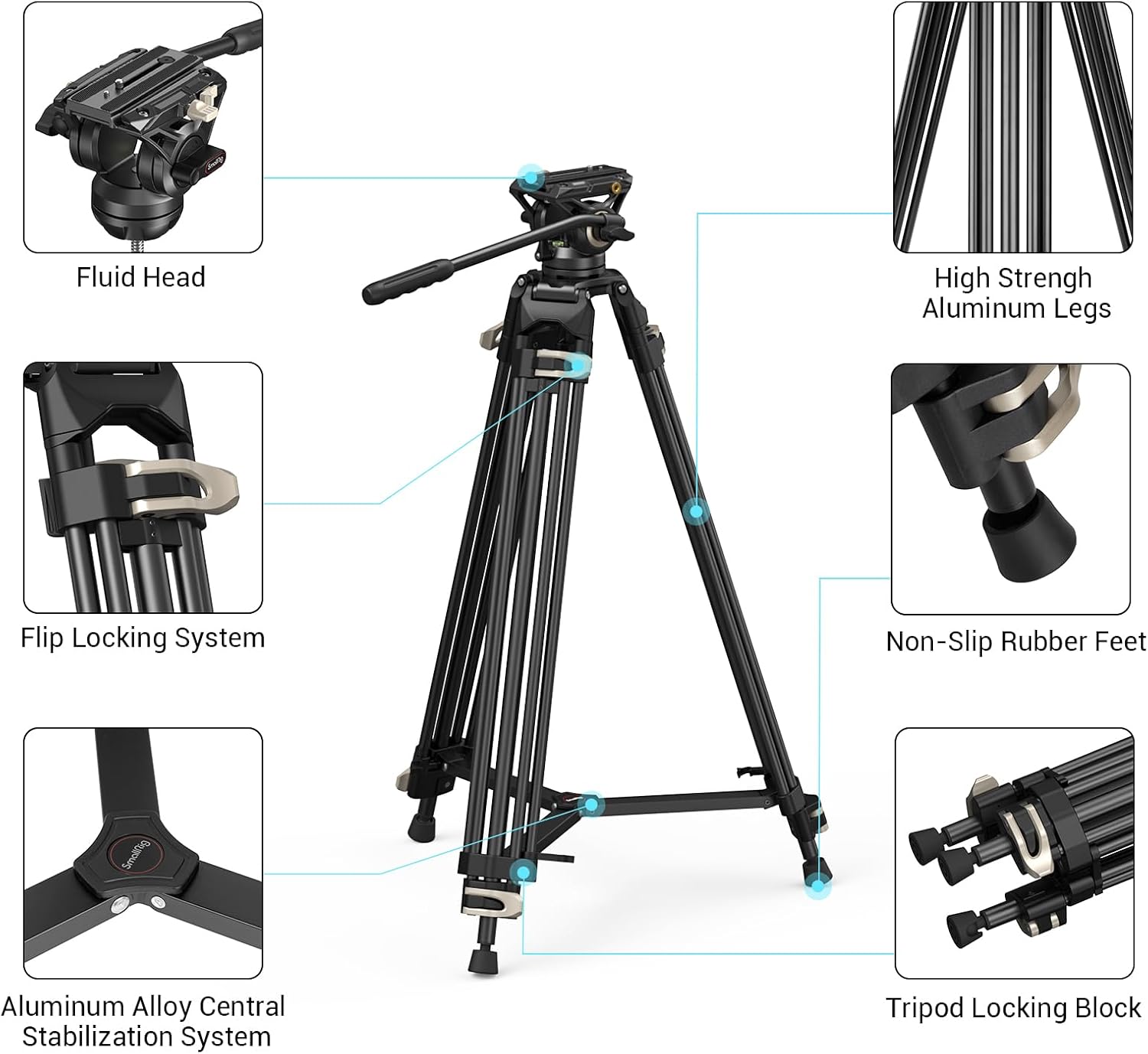
SmallRig
$127.99
In stock on Amazon
Check price on AmazonK&F Concept has built an aggressive catalog in the $80–$180 range, and the formula is familiar: competitive specs on paper and pricing that sits well below European competitors. Across aggregated owner feedback documented in ProVideoCoalition’s support gear field reports and patterns visible in long-form buyer commentary compiled at B&H Photo Video’s fluid head category, a consistent picture emerges.
The most pointed observation owners make is this: heads at twice the price are not twice as good, and K&F has positioned itself directly in that gap. For a Sony A7 IV with a 24-70mm zoom and no accessories, reviewers report smooth-enough operation for talking-head interviews and static setups. The hydraulic drag, while not deeply adjustable, provides workable resistance at the lighter end of the payload range.
The friction point — literally — appears when you push past roughly 2 kg of dressed payload. Owners running a caged camera with even a small monitor begin to report tilt inconsistency: the head feels smooth in one direction and slightly sticky in the other, which typically signals a counterbalance spring that isn’t calibrated to the upper payload range the spec sheet implies it handles. This is a common design compromise at this price point, not a K&F-specific flaw, but it’s worth knowing before you configure your rig.
If X, then Y: If your current kit is a mirrorless body, a single lens, and no cage or on-camera accessories, K&F Concept gives you a legitimate fluid-head experience at a price point that’s genuinely hard to argue with. If you’re already running a cage or plan to within six months, you’re buying at the ceiling of what this head handles well, and spending an extra $80–$100 for a SIRUI or SmallRig mid-tier head will pay off immediately.
SmallRig
$127.99
In stock on Amazon
Check price on AmazonSIRUI SQ75: The One That Holds the Heavy Rig
SIRUI
$149.00
In stock on Amazon
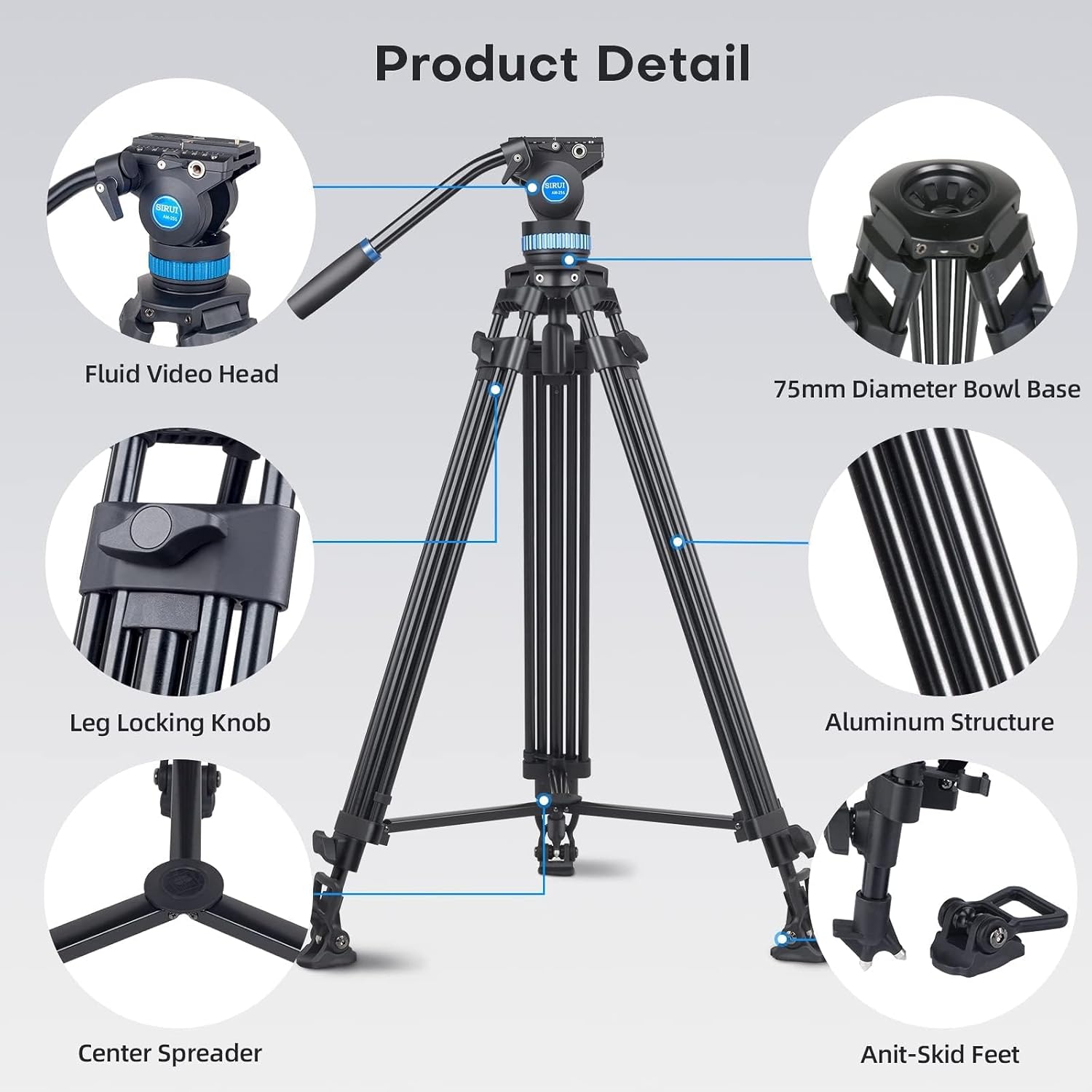
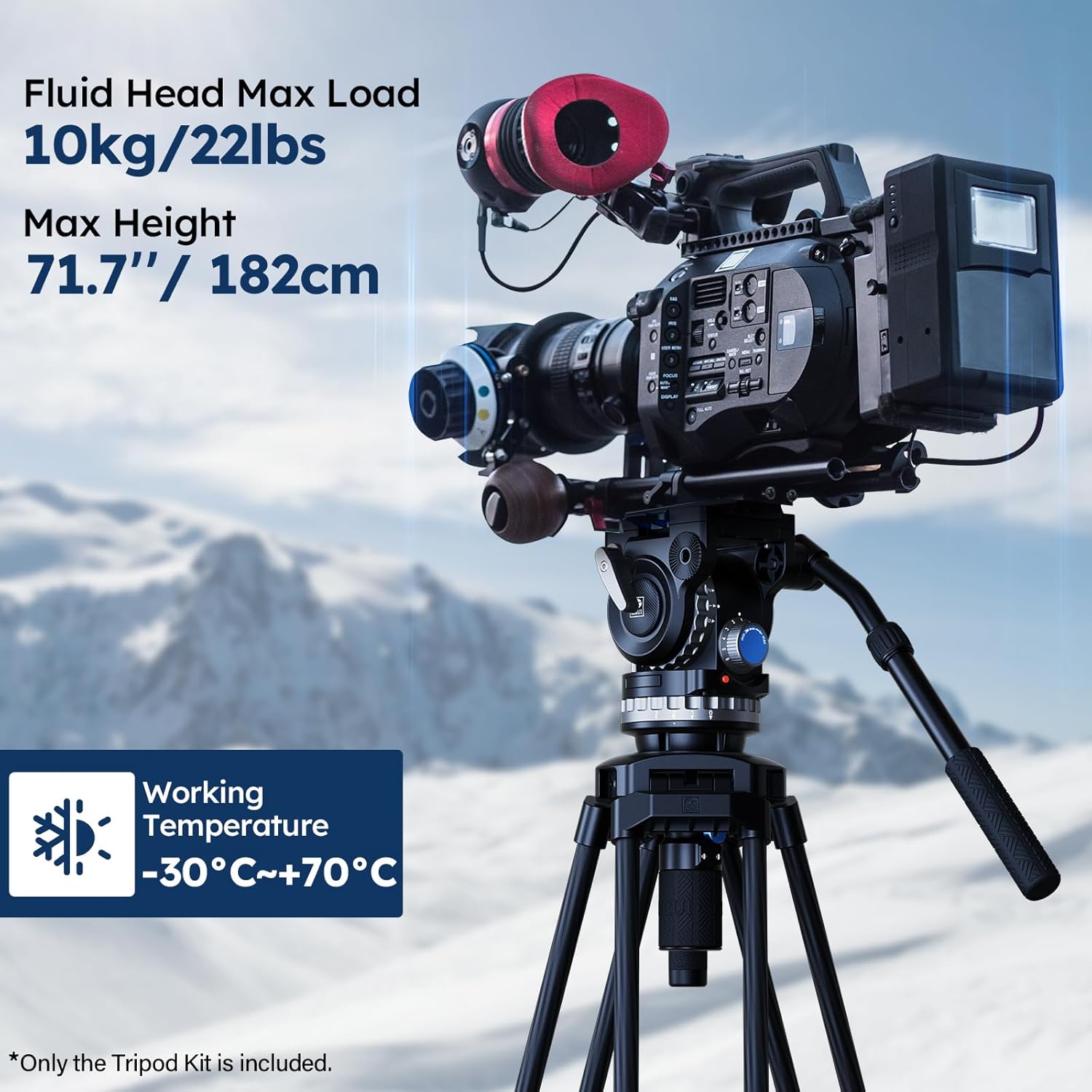
Check price on AmazonThe SIRUI SQ75 — and the broader SIRUI video head lineup — occupies the $150–$280 zone and draws a different class of owner feedback. The validation that stands out most sharply in aggregated reviews is not from a vlogger running a light rig; it’s from an operator running a Blackmagic Cinema Camera body with cine lenses, a follow-focus system, a matte box, V-mount batteries, and an external monitor. That operator reports the head holds without issue, which is unusually strong real-world payload validation for a sub-$300 head.
Cinema5d’s fluid head and support gear comparison coverage notes that SIRUI has historically invested more engineering into their fluid cartridge and counterbalance curve than the price point might suggest — a legacy of competing against Manfrotto and Benro in the photo-tripod space before pushing aggressively into video. The result is a head where the adjustable counterbalance range feels meaningfully wider than on comparable K&F Concept units, and where the drag adjustment behaves predictably across the range rather than jumping between resistance levels.
The 75mm bowl mount is standard on the SQ75, which matters for operators who want to future-proof their legs investment. A 75mm bowl is the entry-level standard for professional video tripod legs, and a head that accepts it integrates cleanly with a wide range of leg upgrades without adapters. B&H Photo Video’s product specification listings for the SQ75 confirm the 75mm bowl interface and the adjustable counterbalance range as standard features at this price tier.
If X, then Y: If you’re running a cinema-adjacent rig — Blackmagic Pocket, or any mirrorless body with a full cage, lens support, and on-camera accessories — the SQ75 is the head in this bracket that owners with heavy rigs consistently trust. It’s the buy that makes sense when you know your payload is at the upper edge of what this tier handles.
SIRUI
$149.00
In stock on Amazon
Check price on AmazonSmallRig Heads: Three Products, Three Different Problems to Solve
SIRUI
$149.00
In stock on Amazon
Check price on AmazonSmallRig has entered the fluid head market with at least three distinct products that matter in this bracket, and conflating them is a mistake.
SmallRig AD-01: This is the entry point, and the pan limitation is real. ProVideoCoalition’s support gear field reports consistently note that intermediate operators often blame their own skill on issues that are actually hardware constraints. The AD-01’s pan axis is one such constraint: pan friction is essentially binary — either locked, or completely free with no variable resistance in between. For video work where smooth controlled pans are the entire point, this requires a compensation technique that a better head doesn’t demand. It matters for video; it’s less relevant if you’re shooting primarily static setups.
SmallRig AD-100 FreeBlazer: This is where SmallRig’s reputation pivot happens. Multiple long-form reviews — including from at least one operator with years of Manfrotto head experience — describe the AD-100 as performing at a comparable level to Manfrotto’s mid-range fluid heads at a meaningfully lower price. That is a specific, informed comparison from someone with a calibrated reference point, not a generic “great value” endorsement. PremiumBeat’s buyer’s guide “Best Video Tripods for Every Budget” has flagged SmallRig’s build progression as a case study in how manufacturers are compressing the quality gap with European brands across successive product generations.
SmallRig TRIBEX SE: The TRIBEX SE is a system product — head plus legs — and its defining feature is the single-lever hydraulic leg adjustment system. For event videographers and one-person crews who move constantly between setups, the ability to extend and lock all three leg sections with a single lever stroke rather than three individual flip-locks is a genuine workflow gain. Owners who work in fast-moving event contexts — corporate, live performance, documentary run-and-gun — consistently highlight this as the reason they chose it over legs with comparable head specifications.
If X, then Y: If you’re doing any meaningful amount of panning, avoid the AD-01 as a primary production head — it is not built for that use. If you’re comparing to Manfrotto and want to spend less, the AD-100 FreeBlazer is the honest comparison. If you’re a one-person event crew who values speed of deployment above all else, the TRIBEX SE’s leg system earns its consideration independent of head quality alone.
SIRUI
$149.00
In stock on Amazon
Check price on AmazonThe miliboo MTT609A: The Endorsement That Matters
SIRUI
$479.00
In stock on Amazon
Check price on AmazonOne head in this price range that earns its own section: the miliboo MTT609A has attracted a specific class of endorsement that’s harder to dismiss than most budget-tier reviews. A shooter with network news experience — having also worked in feature film and documentary — describes the value as exceptional, calling it a working professional’s head at a non-working-professional price. That career context matters. A news shooter operates under time pressure with gear that must perform reliably across widely varying payload and environmental conditions. An endorsement from that professional background carries more signal than enthusiast praise. No Film School’s tripod buyer guidance has referenced professional-context endorsements of miliboo as part of the broader case that the gap between European and Asian-manufactured fluid heads has narrowed substantially in the $200–$300 tier.
SIRUI
$479.00
In stock on Amazon
Check price on AmazonFrequently Asked Questions
Does the K&F Concept fluid head work with heavier mirrorless camera and lens combinations? For a body-plus-lens-only configuration under roughly 2 kg, owners report workable performance. Push into a caged setup with on-camera accessories and you’re likely exceeding the head’s sweet spot for counterbalance. Plan your full dressed payload — not just body weight — before buying. B&H Photo Video’s product Q&A threads for K&F Concept heads reflect this pattern consistently.
What is the pan friction limitation on the SmallRig AD-01 and does it matter for video? The AD-01’s pan axis is either locked or completely free — there is no variable resistance in between. For video work involving controlled pans, this requires a compensation technique that better heads don’t demand. It matters for video; it’s less relevant if you’re shooting primarily static setups or stills.
Can the SIRUI SQ75 handle a fully accessorized cinema rig with V-mount batteries and a monitor? Based on owner reports from operators running Blackmagic Cinema Camera bodies with cine lenses, follow-focus, matte box, V-mount batteries, and a monitor, the answer is yes — the head holds the configuration without issue. This is the strongest real-world payload validation in this price bracket, and cinema5d’s support gear coverage has corroborated SIRUI’s counterbalance engineering as a genuine differentiator at this tier.
Is the SmallRig AD-100 FreeBlazer genuinely comparable to Manfrotto at its price? At least one long-term Manfrotto user describes the AD-100 as performing at a comparable operational level at a better price. That’s an informed comparison with a specific reference point. It’s not identical to Manfrotto’s build — materials and finish differ — but the pan and tilt behavior is described as equivalent by operators who know what Manfrotto feels like from extended professional use.
What does a 75mm bowl mount add and do I need it? A 75mm bowl is a hemispherical socket at the base of the fluid head that mates with a matching 75mm bowl on the tripod legs, allowing you to level the head quickly by tilting it in the bowl rather than adjusting each leg individually. It’s the standard mounting system on professional video legs. If you’re buying legs that you intend to upgrade over time, a head with a 75mm bowl — like the SIRUI SQ75 — integrates without adapters into any professional legs upgrade. Flat-base heads require an adapter to mount on bowl legs, which adds cost and a potential weak point in the support stack.
How fast is the SmallRig TRIBEX SE single-lever leg system in real event shooting conditions? Owners who work in event and live-performance contexts consistently describe it as a meaningful speed advantage over individual flip-lock legs. The single-lever system lets you extend and lock all three leg sections in one motion rather than three separate actions, which compounds across a day of multi-setup event coverage. For a one-person crew where every transition costs time, that’s not a trivial gain.
The Decision Rule
You’re in the $100–$300 bracket because you want professional fluid-head behavior without a professional-tier budget commitment. Here’s the clean decision frame:
- Light rig, limited accessories, price-sensitive: K&F Concept gets you a genuine fluid experience at a price that’s hard to argue with. Know its payload ceiling before you build out your accessory stack.
- Full cinema-adjacent rig, accessory-heavy: SIRUI SQ75 is the validated choice. Owner evidence from heavily loaded rigs is the strongest in this tier, corroborated by cinema5d’s coverage of the brand’s counterbalance engineering.
- Manfrotto comparison, honest budget: SmallRig AD-100 FreeBlazer. The endorsement pattern from experienced Manfrotto users is specific enough to trust, and PremiumBeat’s buyer guidance has tracked SmallRig’s product progression as a genuine quality-gap story.
- One-person event or run-and-gun crew: SmallRig TRIBEX SE, for the legs system as much as the head.
- News or documentary workflow, need working-professional validation: miliboo MTT609A earns a serious look based on the professional endorsement pattern documented in No Film School’s tripod buyer guidance.
The one rule that applies across all of them: calculate your dressed payload before you buy — body, lens, cage, accessories, everything. That number, matched against the head’s counterbalance range, is the variable that separates a smooth production tool from an expensive frustration.